Explosion Proof Motor FAQ
What are the requirements for a Class I Division 2 motor under the National Electrical Code?
Under NEC Article 501, a motor installed in a Class I Division 2 location must be either listed for the specific gas group and temperature class present, identified as suitable for the location, or be of a type that does not produce sparks or hot surfaces capable of igniting the hazardous atmosphere under normal operating conditions. Acceptable constructions typically include non-sparking (Ex nA) motors, totally enclosed motors with internal arcing devices isolated, or full explosion proof (Ex d) motors that already satisfy the more demanding Division 1 requirements.
Is a Class I Division 2 motor the same as an explosion proof motor?
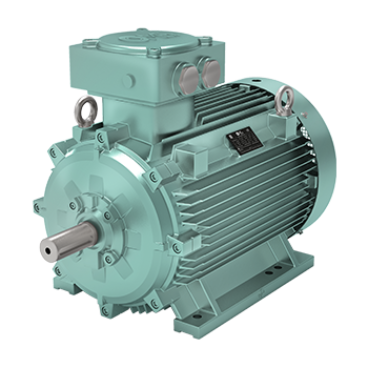
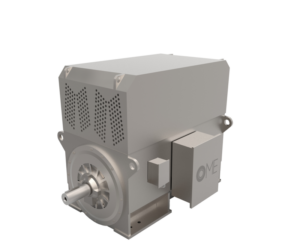
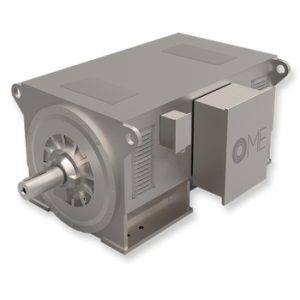
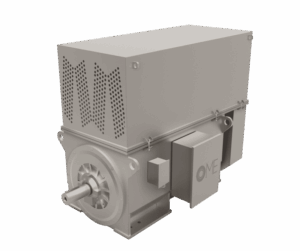
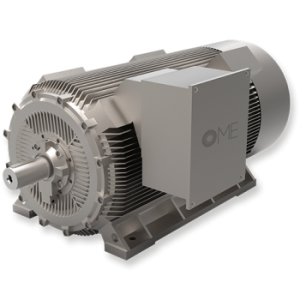
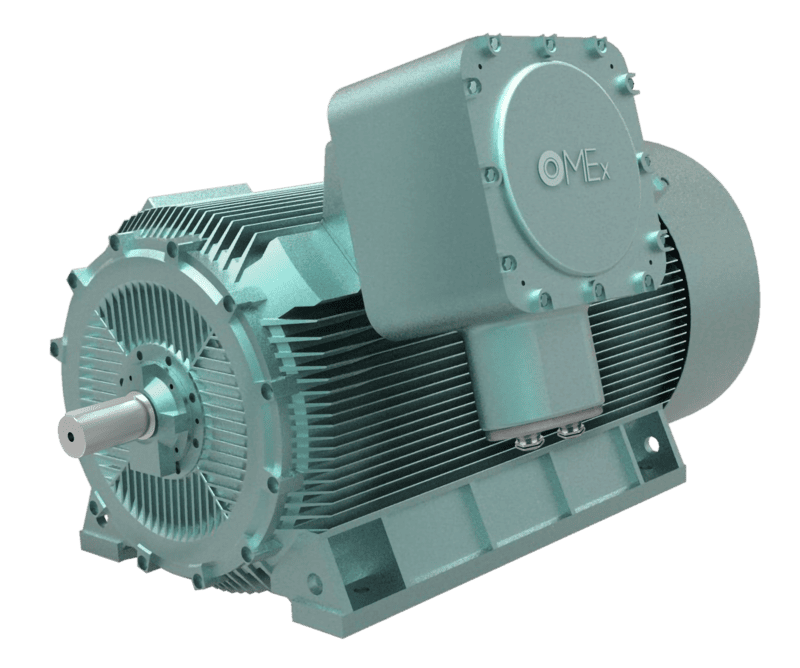
Not necessarily. An explosion proof motor — built to contain an internal explosion and prevent ignition of the surrounding atmosphere — automatically satisfies both Division 1 and Division 2 requirements. A motor rated only for Division 2, however, is typically a non-sparking design intended for atmospheres where flammable gases are present only under abnormal conditions; it would not be acceptable in a Division 1 area. The OMEX series is built to the more stringent explosion proof standard and is therefore suitable for both Division 1 and Division 2 locations within its certified gas group and temperature class.
What is the difference between a TEFC motor and an explosion proof motor?
A TEFC (Totally Enclosed Fan Cooled) motor is a general-purpose enclosure type designed to prevent ingress of dust, dirt, and moisture, but it is not built to contain an internal explosion. An explosion proof motor uses a heavy cast iron or steel enclosure, machined flame paths at every joint, and certified gaskets, all engineered so that if a flammable atmosphere enters the housing and ignites, the resulting explosion is contained and the flame does not propagate to the surrounding hazardous atmosphere. TEFC alone is not acceptable in Class I Division 1 or Division 2 locations.
What do the markings Ex d IIB T4 and Ex d IIC T4 mean on an explosion proof motor?
The marking identifies the certified protection method and the hazardous atmosphere the motor is approved for. Ex d denotes flameproof enclosure construction. IIB and IIC are gas group classifications: IIB covers gases such as ethylene; IIC is the most demanding group and covers hydrogen and acetylene. T4 is the temperature class, meaning the maximum surface temperature of the motor under normal operation does not exceed 135 °C. OMEX motors are certified in both IIB and IIC variants, allowing selection based on the specific process gases present at the installation site.
Can the same explosion proof motor be used in ATEX, IECEx, and Class I Division installations?
A single motor can carry multiple certifications, but the markings and the certifying bodies are distinct. ATEX is the European Union directive (2014/34/EU), IECEx is the international IEC scheme, and Class I Division is the North American framework under NEC and CSA. OMEX motors are ATEX and IECEx certified at the factory, which covers most global hazardous-area projects; for US installations requiring NEC compliance, additional UL or CSA listing for hazardous locations may be required depending on the end user and AHJ. The OME technical team confirms the certification path for each project.
What industries and applications typically require explosion proof motors?
Explosion proof motors are required wherever flammable gases, vapors, or combustible dust may be present during normal operation or during foreseeable abnormal events. The dominant industries are oil and gas — production platforms, refineries, midstream pipelines, LNG terminals — petrochemical and chemical processing, pharmaceutical manufacturing, paint and solvent handling, grain handling and milling, wastewater treatment plants with digester gas, and offshore wind installations. Typical driven loads include centrifugal pumps, fans and blowers, agitators, and compressors operating in classified zones around the process equipment.

{
“@context”: “https://schema.org”,
“@type”: “FAQPage”,
“mainEntity”: [
{
“@type”: “Question”,
“name”: “What are the requirements for a Class I Division 2 motor under the National Electrical Code?”,
“acceptedAnswer”: {
“@type”: “Answer”,
“text”: “Under NEC Article 501, a motor installed in a Class I Division 2 location must be either listed for the specific gas group and temperature class present, identified as suitable for the location, or be of a type that does not produce sparks or hot surfaces capable of igniting the hazardous atmosphere under normal operating conditions. Acceptable constructions typically include non-sparking (Ex nA) motors, totally enclosed motors with internal arcing devices isolated, or full explosion proof (Ex d) motors that already satisfy the more demanding Division 1 requirements.”
}
},
{
“@type”: “Question”,
“name”: “Is a Class I Division 2 motor the same as an explosion proof motor?”,
“acceptedAnswer”: {
“@type”: “Answer”,
“text”: “Not necessarily. An explosion proof motor — built to contain an internal explosion and prevent ignition of the surrounding atmosphere — automatically satisfies both Division 1 and Division 2 requirements. A motor rated only for Division 2, however, is typically a non-sparking design intended for atmospheres where flammable gases are present only under abnormal conditions; it would not be acceptable in a Division 1 area. The OMEX series is built to the more stringent explosion proof standard and is therefore suitable for both Division 1 and Division 2 locations within its certified gas group and temperature class.”
}
},
{
“@type”: “Question”,
“name”: “What is the difference between a TEFC motor and an explosion proof motor?”,
“acceptedAnswer”: {
“@type”: “Answer”,
“text”: “A TEFC (Totally Enclosed Fan Cooled) motor is a general-purpose enclosure type designed to prevent ingress of dust, dirt, and moisture, but it is not built to contain an internal explosion. An explosion proof motor uses a heavy cast iron or steel enclosure, machined flame paths at every joint, and certified gaskets, all engineered so that if a flammable atmosphere enters the housing and ignites, the resulting explosion is contained and the flame does not propagate to the surrounding hazardous atmosphere. TEFC alone is not acceptable in Class I Division 1 or Division 2 locations.”
}
},
{
“@type”: “Question”,
“name”: “What do the markings Ex d IIB T4 and Ex d IIC T4 mean on an explosion proof motor?”,
“acceptedAnswer”: {
“@type”: “Answer”,
“text”: “The marking identifies the certified protection method and the hazardous atmosphere the motor is approved for. Ex d denotes flameproof enclosure construction. IIB and IIC are gas group classifications: IIB covers gases such as ethylene; IIC is the most demanding group and covers hydrogen and acetylene. T4 is the temperature class, meaning the maximum surface temperature of the motor under normal operation does not exceed 135 °C. OMEX motors are certified in both IIB and IIC variants, allowing selection based on the specific process gases present at the installation site.”
}
},
{
“@type”: “Question”,
“name”: “Can the same explosion proof motor be used in ATEX, IECEx, and Class I Division installations?”,
“acceptedAnswer”: {
“@type”: “Answer”,
“text”: “A single motor can carry multiple certifications, but the markings and the certifying bodies are distinct. ATEX is the European Union directive (2014/34/EU), IECEx is the international IEC scheme, and Class I Division is the North American framework under NEC and CSA. OMEX motors are ATEX and IECEx certified at the factory, which covers most global hazardous-area projects; for US installations requiring NEC compliance, additional UL or CSA listing for hazardous locations may be required depending on the end user and AHJ. The OME technical team confirms the certification path for each project.”


}
},
{
“@type”: “Question”,
“name”: “What industries and applications typically require explosion proof motors?”,
“acceptedAnswer”: {
“@type”: “Answer”,
“text”: “Explosion proof motors are required wherever flammable gases, vapors, or combustible dust may be present during normal operation or during foreseeable abnormal events. The dominant industries are oil and gas — production platforms, refineries, midstream pipelines, LNG terminals — petrochemical and chemical processing, pharmaceutical manufacturing, paint and solvent handling, grain handling and milling, wastewater treatment plants with digester gas, and offshore wind installations. Typical driven loads include centrifugal pumps, fans and blowers, agitators, and compressors operating in classified zones around the process equipment.”
}
}
]
}