UL/CSA Electric Motor FAQ
What does it mean for an electric motor to be UL listed or CSA certified?
UL listing means the motor has been tested by Underwriters Laboratories against a specific UL standard — for industrial motors typically UL 1004 — and the manufacturer’s production is subject to ongoing audit by UL. CSA certification under the Canadian Standards Association serves the same function for the Canadian market under C22.2 No. 100. Both marks confirm that the motor meets recognized North American safety, construction, and performance standards, and they are frequently required by Authorities Having Jurisdiction (AHJ), insurance carriers, and end users specifying equipment for US and Canadian installations.
Does NEMA Premium efficiency apply to UL/CSA motors, and what efficiency levels does it require?
Yes. NEMA Premium is an efficiency designation defined by NEMA MG 1, Table 12-12, that establishes minimum nominal efficiency values for general-purpose AC motors from 1 to 500 hp. The required efficiency varies by horsepower, pole count, and enclosure (ODP vs TEFC) — for example, a 4-pole TEFC 100 hp motor must reach 95.4% nominal efficiency. The Energy Independence and Security Act (EISA) and the Department of Energy regulations adopted NEMA Premium as the federally enforced minimum for most general-purpose motors sold in the US. OME UL/CSA motors meet or exceed these thresholds.
What is the difference between EPCA and DOE regulations for electric motors?
The Energy Policy and Conservation Act (EPCA) is the federal statutory framework, originally enacted in 1975 and amended several times — most significantly by EISA in 2007 — that gives the Department of Energy (DOE) authority to set and enforce minimum energy conservation standards for industrial electric motors. The DOE rules implement EPCA by defining motor scope, test procedures (typically IEEE 112-B), and the minimum nominal efficiency tables that must be met at the date of manufacture. In practical terms, EPCA is the law and DOE motor regulations are the binding technical requirements that follow from it.
Which NEMA frame sizes does OME Motors supply for the US market?
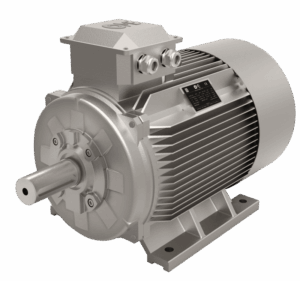
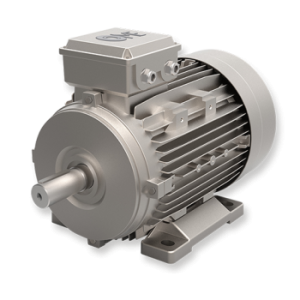
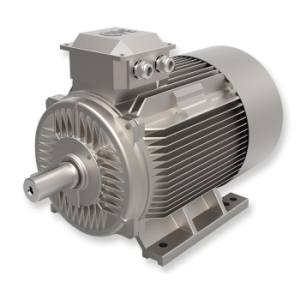
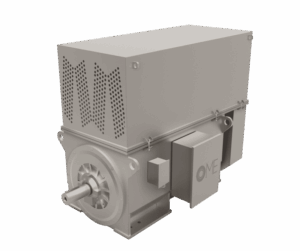
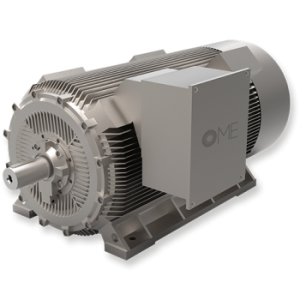
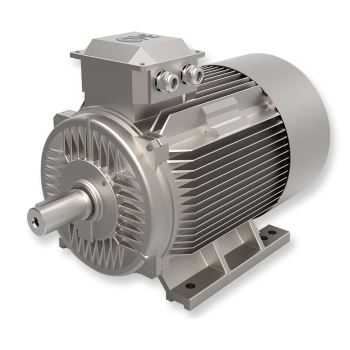
OME Motors supplies UL/CSA electric motors built to standard NEMA frame dimensions across the integral horsepower range. The series covers ratings from 0.75 to 375 kW (approximately 1 to 500 hp), voltages up to 600 V, frequencies of 50 and 60 Hz, and pole configurations at 2, 4, 6, and 8 poles. The motors are three-phase induction with squirrel cage rotor, designed for S1 continuous duty under standard ambient conditions. Specific frame designations and mounting dimensions are provided in the catalog data sheets for each model.
What is the voltage threshold between low voltage and medium voltage motors in the US market?
In the North American framework defined by NEMA and the National Electrical Code, the low voltage range for industrial motors extends up to 600 V, with 230 V, 460 V, and 575 V being the most common nominal ratings. Above 600 V the motor is considered medium voltage, with standard nominal ratings at 2,300 V, 4,000 V, 4,160 V, and higher. This threshold differs from the international (IEC) framework, where low voltage extends up to 1,000 V. Project specifications and switchgear ratings must be matched to the correct voltage class.
What is the difference between NEMA Premium and IE4 efficiency classes?
NEMA Premium is the US efficiency designation defined under NEMA MG 1 and enforced through DOE regulations. IE4 is the international “Super Premium Efficiency” class defined under IEC 60034-30-1. The two systems use different test methods — IEEE 112-B in the US versus IEC 60034-2-1 internationally — and apply slightly different correction factors, so direct number-to-number comparison must be done carefully. In broad terms, IE4 efficiency values are typically 1 to 2 percentage points above NEMA Premium for equivalent ratings, making IE4 a stricter benchmark. Motors can be designed and tested to both standards in parallel.
{
“@context”: “https://schema.org”,
“@type”: “FAQPage”,
“mainEntity”: [
{
“@type”: “Question”,
“name”: “What does it mean for an electric motor to be UL listed or CSA certified?”,
“acceptedAnswer”: {
“@type”: “Answer”,
“text”: “UL listing means the motor has been tested by Underwriters Laboratories against a specific UL standard — for industrial motors typically UL 1004 — and the manufacturer’s production is subject to ongoing audit by UL. CSA certification under the Canadian Standards Association serves the same function for the Canadian market under C22.2 No. 100. Both marks confirm that the motor meets recognized North American safety, construction, and performance standards, and they are frequently required by Authorities Having Jurisdiction (AHJ), insurance carriers, and end users specifying equipment for US and Canadian installations.”
}
},
{
“@type”: “Question”,
“name”: “Does NEMA Premium efficiency apply to UL/CSA motors, and what efficiency levels does it require?”,
“acceptedAnswer”: {
“@type”: “Answer”,
“text”: “Yes. NEMA Premium is an efficiency designation defined by NEMA MG 1, Table 12-12, that establishes minimum nominal efficiency values for general-purpose AC motors from 1 to 500 hp. The required efficiency varies by horsepower, pole count, and enclosure (ODP vs TEFC) — for example, a 4-pole TEFC 100 hp motor must reach 95.4% nominal efficiency. The Energy Independence and Security Act (EISA) and the Department of Energy regulations adopted NEMA Premium as the federally enforced minimum for most general-purpose motors sold in the US. OME UL/CSA motors meet or exceed these thresholds.”
}
},
{
“@type”: “Question”,
“name”: “What is the difference between EPCA and DOE regulations for electric motors?”,
“acceptedAnswer”: {
“@type”: “Answer”,
“text”: “The Energy Policy and Conservation Act (EPCA) is the federal statutory framework, originally enacted in 1975 and amended several times — most significantly by EISA in 2007 — that gives the Department of Energy (DOE) authority to set and enforce minimum energy conservation standards for industrial electric motors. The DOE rules implement EPCA by defining motor scope, test procedures (typically IEEE 112-B), and the minimum nominal efficiency tables that must be met at the date of manufacture. In practical terms, EPCA is the law and DOE motor regulations are the binding technical requirements that follow from it.”
}
},
{
“@type”: “Question”,
“name”: “Which NEMA frame sizes does OME Motors supply for the US market?”,
“acceptedAnswer”: {
“@type”: “Answer”,
“text”: “OME Motors supplies UL/CSA electric motors built to standard NEMA frame dimensions across the integral horsepower range. The series covers ratings from 0.75 to 375 kW (approximately 1 to 500 hp), voltages up to 600 V, frequencies of 50 and 60 Hz, and pole configurations at 2, 4, 6, and 8 poles. The motors are three-phase induction with squirrel cage rotor, designed for S1 continuous duty under standard ambient conditions. Specific frame designations and mounting dimensions are provided in the catalog data sheets for each model.”
}
},
{
“@type”: “Question”,
“name”: “What is the voltage threshold between low voltage and medium voltage motors in the US market?”,
“acceptedAnswer”: {
“@type”: “Answer”,
“text”: “In the North American framework defined by NEMA and the National Electrical Code, the low voltage range for industrial motors extends up to 600 V, with 230 V, 460 V, and 575 V being the most common nominal ratings. Above 600 V the motor is considered medium voltage, with standard nominal ratings at 2,300 V, 4,000 V, 4,160 V, and higher. This threshold differs from the international (IEC) framework, where low voltage extends up to 1,000 V. Project specifications and switchgear ratings must be matched to the correct voltage class.”
}
},
{
“@type”: “Question”,
“name”: “What is the difference between NEMA Premium and IE4 efficiency classes?”,
“acceptedAnswer”: {
“@type”: “Answer”,
“text”: “NEMA Premium is the US efficiency designation defined under NEMA MG 1 and enforced through DOE regulations. IE4 is the international \”Super Premium Efficiency\” class defined under IEC 60034-30-1. The two systems use different test methods — IEEE 112-B in the US versus IEC 60034-2-1 internationally — and apply slightly different correction factors, so direct number-to-number comparison must be done carefully. In broad terms, IE4 efficiency values are typically 1 to 2 percentage points above NEMA Premium for equivalent ratings, making IE4 a stricter benchmark. Motors can be designed and tested to both standards in parallel.”
}
}
]
}










































 Headquarter - Via Camillo Golgi 8 - 25064 GUSSAGO (BS)