
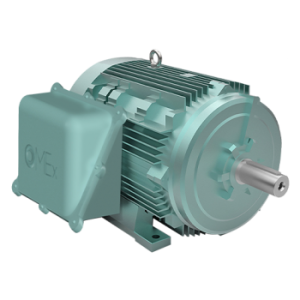
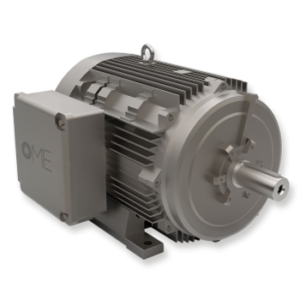
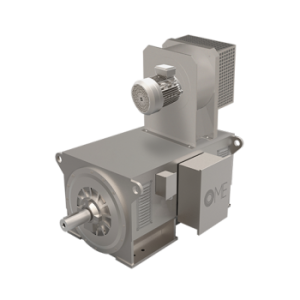
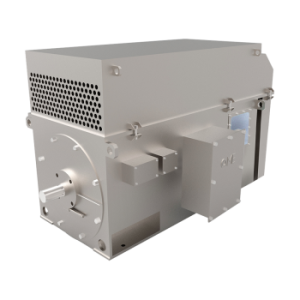
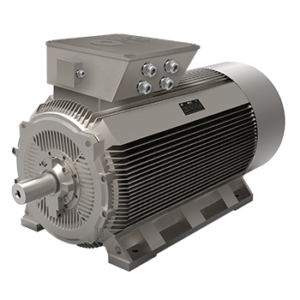

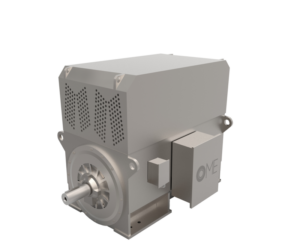
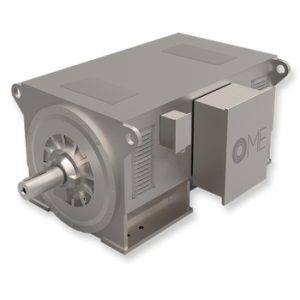
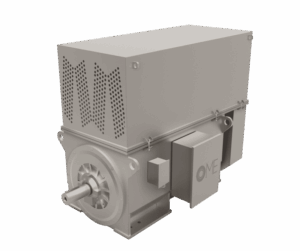
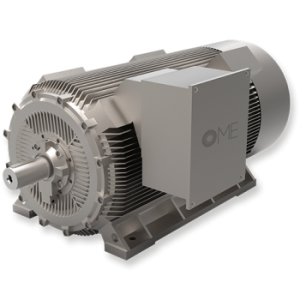
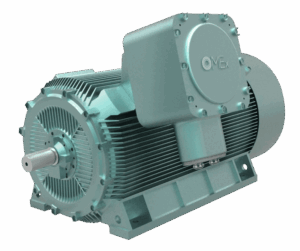
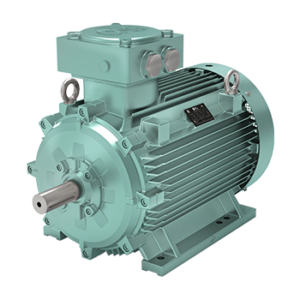
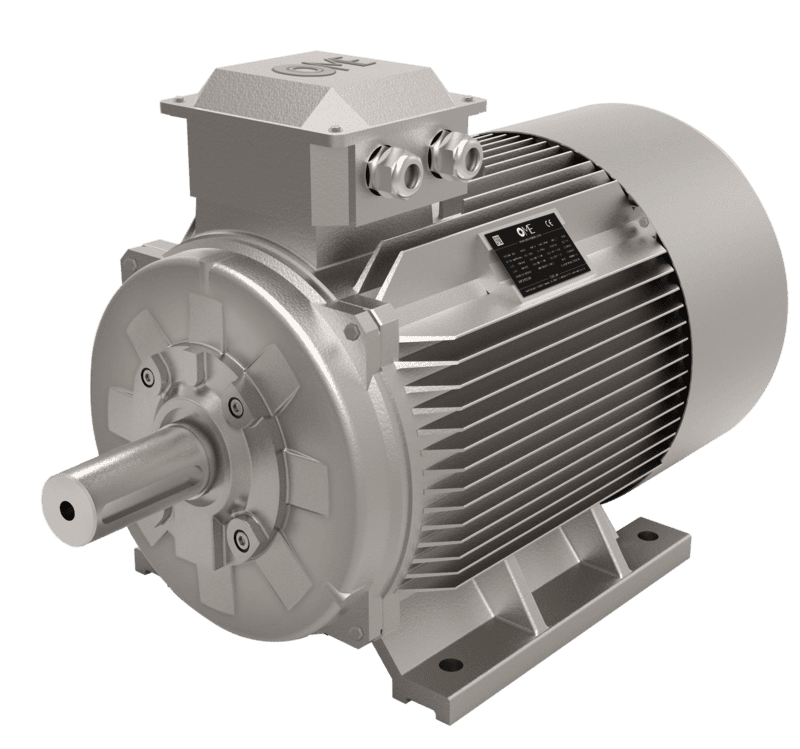
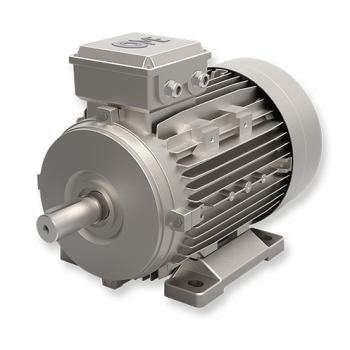
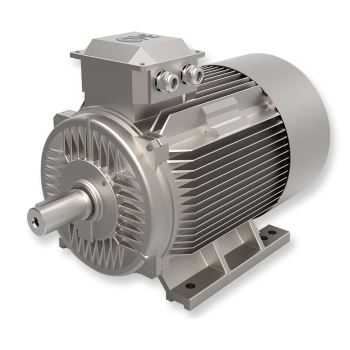
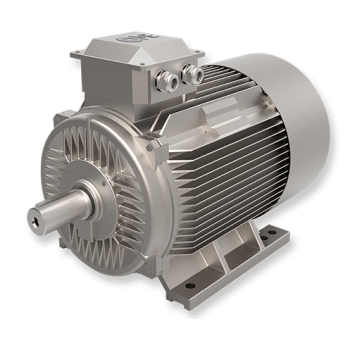
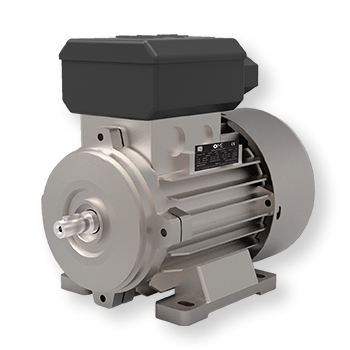
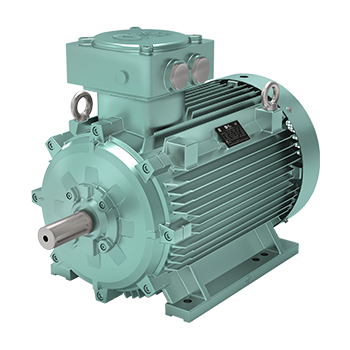

Product range overview:
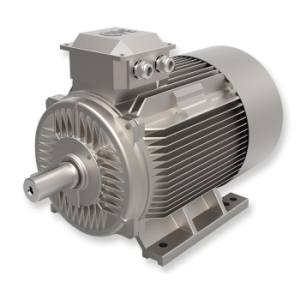
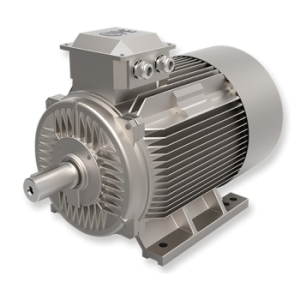
The OME Motors industrial electric motor portfolio is organized around six product families, each linked below to its dedicated page.
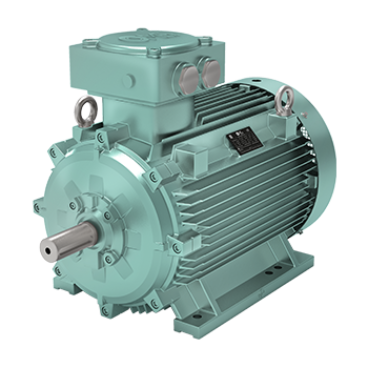
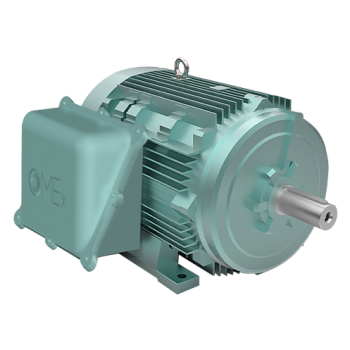
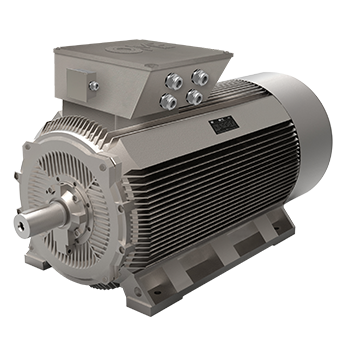
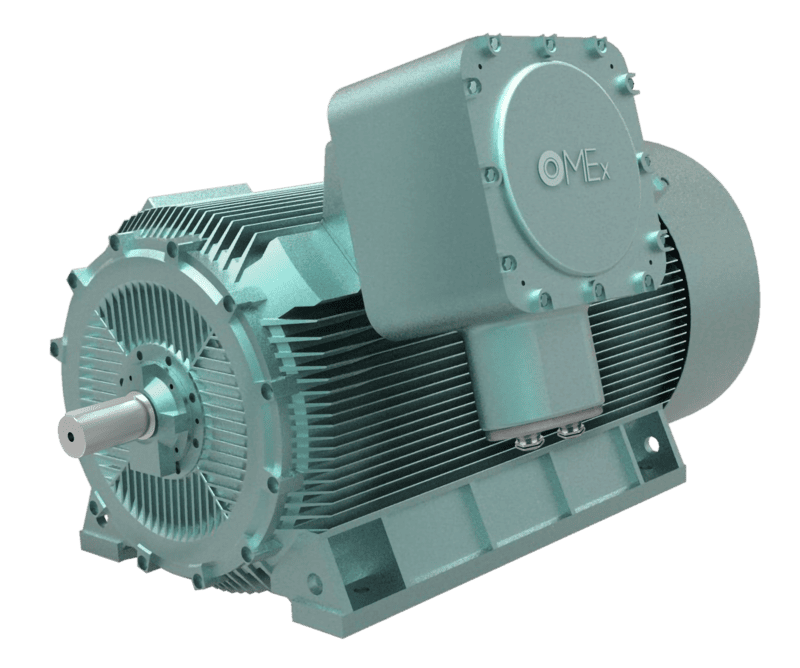
- Explosion proof motors (OMEX) — Class I Division 1 and Division 2, ATEX, IECEx; Ex d IIB and IIC, T4 temperature class; cast iron frame from 80 to 710H.
- Permanent magnet synchronous motors (OMPM) — PMSM Ultra Premium efficiency above IE4 / NEMA Premium; 0.75 to 2,500 kW; VFD-driven and Line-Start variants; IPM and SPM topologies.
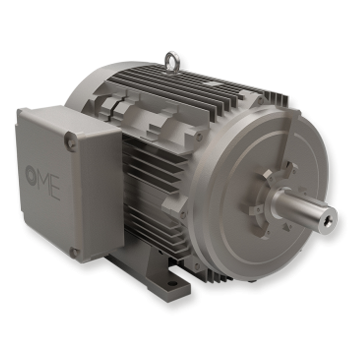
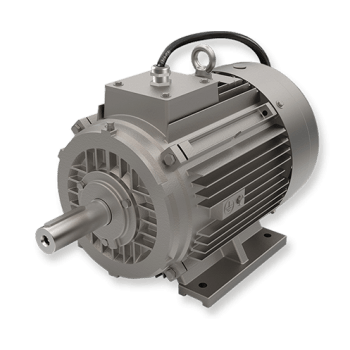
- UL/CSA electric motors — NEMA frame, NEMA Premium efficiency, up to 600 V, 0.75 to 375 kW, for US and Canadian markets; EPCA / DOE compliant.
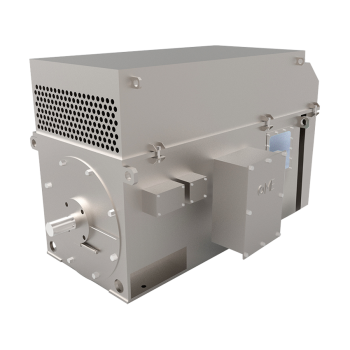
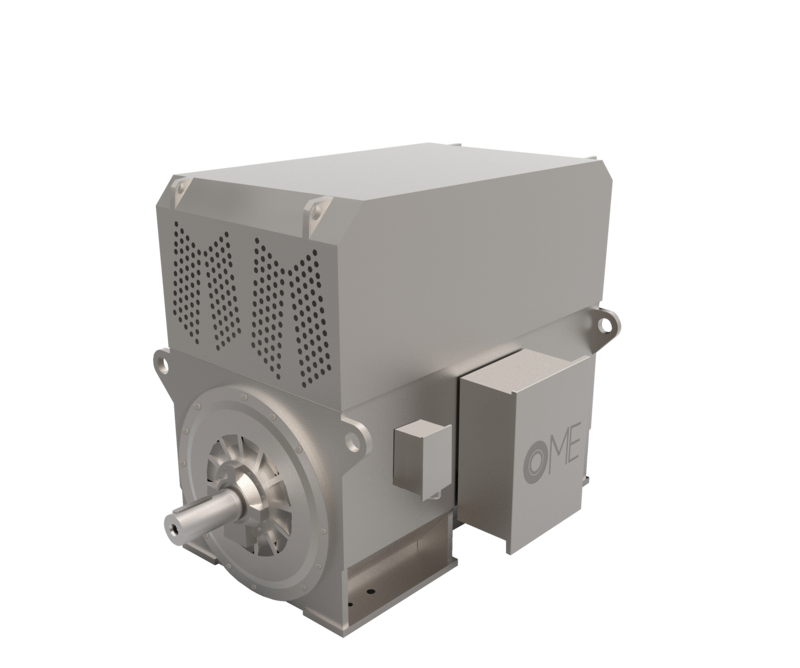
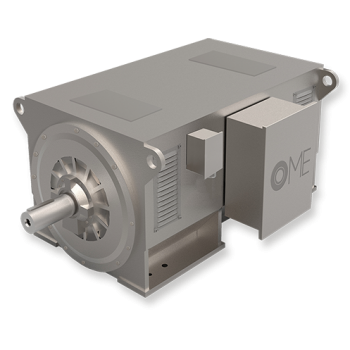
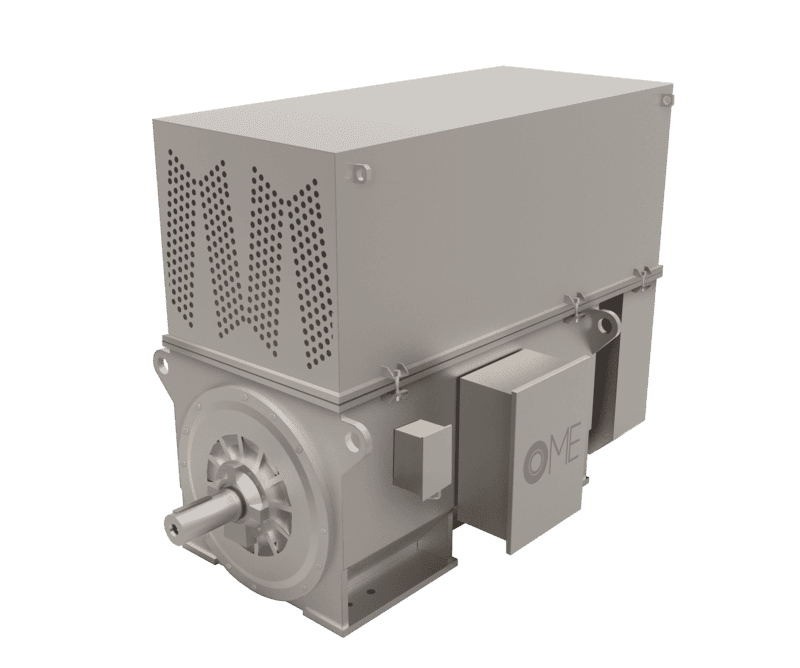
- High voltage and medium voltage motors (OMV, OMVP, OMVK, OMVKS) — up to 13.8 kV, large frames for refinery, power generation, and marine main drives.
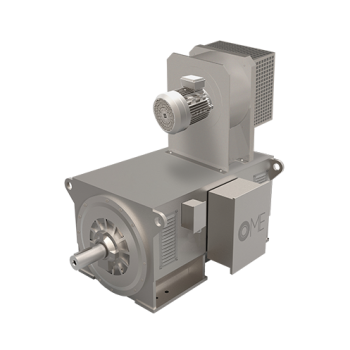
- DC industrial motors (OMDC) — 0.4 to 500 kW, 180 to 500 V armature voltage, for rolling mills, hoists, paper machines, and process duty requiring full torque from zero speed.
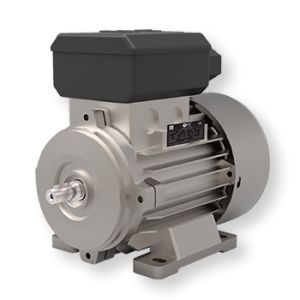
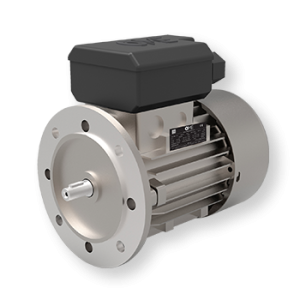
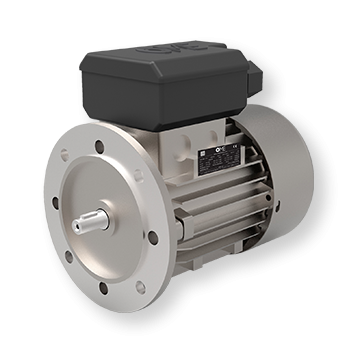
- Single-phase motors (OMM1 and OMM2) — small-frame three-phase alternative for 220 V single-phase networks.
- Synchronous generators — brushless construction for cogeneration, hydroelectric, wind, and emergency power.
Industries served:
- Oil and gas: upstream production, refineries, pipelines, LNG, offshore platforms
- Petrochemical and chemical processing
- Power generation: thermal, combined cycle, cogeneration, hydroelectric, wind
- Water and wastewater: pumping stations, desalination, irrigation, treatment plants
- Iron, steel, and aluminum: rolling mills, casting lines, finishing equipment
- Mining and minerals processing
- Pulp, paper, and printing
- Marine and offshore: propulsion auxiliaries, deck machinery, dynamic positioning
- HVAC and building services
- Food, beverage, and pharmaceutical processing
Certifications and standards: Every OME industrial electric motor is built and tested to the international and regional standards that govern the target market and the specific application:
- IE2, IE3, IE4 efficiency classes per IEC 60034-30-1
- NEMA Premium efficiency per NEMA MG 1 Table 12-12 (US market)
- ATEX Directive 2014/34/EU and IECEx scheme for hazardous areas
- UL and CSA listings for North American projects
- GOST, EAC, CCC, and other regional certifications on request
Industrial Electric Motor FAQ
What types of industrial electric motors does OME Motors manufacture?
OME Motors manufactures a full range of industrial electric machines built around six core product families. The OMEX series covers explosion proof motors for Class I Division 1 and Division 2 and for ATEX/IECEx zones. The OMPM series is the permanent magnet synchronous (PMSM) range for ultra-premium efficiency variable-speed applications. The OMV, OMVP, OMVK, and OMVKS families cover the high voltage and medium voltage range up to 13.8 kV. The UL/CSA series is built to NEMA frames for the US and Canadian markets. The OMDC range covers DC motors for laminating, hoisting, and process duty. Single-phase motors OMM1 and OMM2 complete the portfolio together with synchronous generators.
What is the difference between an AC motor and a DC motor in industrial applications?
An AC motor — typically a three-phase induction or permanent magnet synchronous machine — is powered by alternating current, has no brushes in the most common designs, and is the dominant choice for general industrial duty because of its simplicity, robustness, and low maintenance. A DC motor is powered by direct current through an armature and commutator with carbon brushes, and is selected when the application requires very high starting torque, wide constant-torque speed range, frequent reversing, or regenerative braking. Typical DC duty includes rolling mills, hoisting equipment, paper machines, and wire drawing lines. The OMDC series covers these applications.
How do I select the right industrial electric motor for my application?
The selection process starts from five inputs: the rated mechanical load (kW or hp), the required speed and torque profile, the supply voltage and frequency available at the installation, the ambient and area classification (temperature, altitude, hazardous zone), and the regulatory and certification requirements imposed by the project (NEMA Premium, IE3/IE4, ATEX, UL, CSA, marine class). From these inputs the motor type, frame size, efficiency class, enclosure (TEFC/TEAO/explosion proof), and certification path are defined. The OME Motors technical team supports sizing and configuration on a project-by-project basis.
What is the difference between low voltage and high voltage industrial motors?
In the international (IEC) framework, low voltage motors operate up to 1,000 V and high voltage motors above 1,000 V, with standard ratings at 3.3 kV, 6 kV, 6.6 kV, 10 kV, and 13.8 kV. In the North American (NEMA / NEC) framework, low voltage extends only to 600 V and motors above that threshold are classified as medium voltage. The choice between LV and HV is driven primarily by motor rating: above approximately 300 kW the cable and switchgear cost reduction at higher voltage typically outweighs the higher motor cost, making HV motors the economic choice for large pumps, compressors, and fans.
Does OME Motors supply electric motors certified for the US market?
Yes. The OME UL/CSA series is engineered to NEMA frame dimensions, 600 V class voltages, and NEMA Premium efficiency levels in compliance with EPCA and the Department of Energy minimum efficiency rules. For hazardous locations, the OMEX explosion proof series covers Class I Division 1 and Division 2 areas and is available with the certifications required by the project and the Authority Having Jurisdiction. ATEX and IECEx certifications are supplied as standard on the OMEX range, allowing the same motor platform to be specified across US, European, and international hazardous-area projects.
Where are OME industrial electric motors manufactured?
OME Motors is an Italian electric motor manufacturer headquartered in Brescia, Lombardy, with over 60 years of engineering and manufacturing experience. Design, machining of cast iron frames, winding, assembly, and testing of every motor are performed in-house at the Italian facility, which allows the company to offer a high level of customization on dimensions, voltage, certification, and special construction features. The motors are exported to oil and gas, petrochemical, water, power generation, marine, and heavy-industry projects worldwide.
{
“@context”: “https://schema.org”,
“@type”: “FAQPage”,
“mainEntity”: [
{
“@type”: “Question”,
“name”: “What types of industrial electric motors does OME Motors manufacture?”,
“acceptedAnswer”: {
“@type”: “Answer”,
“text”: “OME Motors manufactures a full range of industrial electric machines built around six core product families. The OMEX series covers explosion proof motors for Class I Division 1 and Division 2 and for ATEX/IECEx zones. The OMPM series is the permanent magnet synchronous (PMSM) range for ultra-premium efficiency variable-speed applications. The OMV, OMVP, OMVK, and OMVKS families cover the high voltage and medium voltage range up to 13.8 kV. The UL/CSA series is built to NEMA frames for the US and Canadian markets. The OMDC range covers DC motors for laminating, hoisting, and process duty. Single-phase motors OMM1 and OMM2 complete the portfolio together with synchronous generators.”
}
},
{
“@type”: “Question”,
“name”: “What is the difference between an AC motor and a DC motor in industrial applications?”,
“acceptedAnswer”: {
“@type”: “Answer”,
“text”: “An AC motor — typically a three-phase induction or permanent magnet synchronous machine — is powered by alternating current, has no brushes in the most common designs, and is the dominant choice for general industrial duty because of its simplicity, robustness, and low maintenance. A DC motor is powered by direct current through an armature and commutator with carbon brushes, and is selected when the application requires very high starting torque, wide constant-torque speed range, frequent reversing, or regenerative braking. Typical DC duty includes rolling mills, hoisting equipment, paper machines, and wire drawing lines. The OMDC series covers these applications.”
}
},
{
“@type”: “Question”,
“name”: “How do I select the right industrial electric motor for my application?”,
“acceptedAnswer”: {
“@type”: “Answer”,
“text”: “The selection process starts from five inputs: the rated mechanical load (kW or hp), the required speed and torque profile, the supply voltage and frequency available at the installation, the ambient and area classification (temperature, altitude, hazardous zone), and the regulatory and certification requirements imposed by the project (NEMA Premium, IE3/IE4, ATEX, UL, CSA, marine class). From these inputs the motor type, frame size, efficiency class, enclosure (TEFC/TEAO/explosion proof), and certification path are defined. The OME Motors technical team supports sizing and configuration on a project-by-project basis.”
}
},
{
“@type”: “Question”,
“name”: “What is the difference between low voltage and high voltage industrial motors?”,
“acceptedAnswer”: {
“@type”: “Answer”,
“text”: “In the international (IEC) framework, low voltage motors operate up to 1,000 V and high voltage motors above 1,000 V, with standard ratings at 3.3 kV, 6 kV, 6.6 kV, 10 kV, and 13.8 kV. In the North American (NEMA / NEC) framework, low voltage extends only to 600 V and motors above that threshold are classified as medium voltage. The choice between LV and HV is driven primarily by motor rating: above approximately 300 kW the cable and switchgear cost reduction at higher voltage typically outweighs the higher motor cost, making HV motors the economic choice for large pumps, compressors, and fans.”
}
},
{
“@type”: “Question”,
“name”: “Does OME Motors supply electric motors certified for the US market?”,
“acceptedAnswer”: {
“@type”: “Answer”,
“text”: “Yes. The OME UL/CSA series is engineered to NEMA frame dimensions, 600 V class voltages, and NEMA Premium efficiency levels in compliance with EPCA and the Department of Energy minimum efficiency rules. For hazardous locations, the OMEX explosion proof series covers Class I Division 1 and Division 2 areas and is available with the certifications required by the project and the Authority Having Jurisdiction. ATEX and IECEx certifications are supplied as standard on the OMEX range, allowing the same motor platform to be specified across US, European, and international hazardous-area projects.”
}
},
{
“@type”: “Question”,
“name”: “Where are OME industrial electric motors manufactured?”,
“acceptedAnswer”: {
“@type”: “Answer”,
“text”: “OME Motors is an Italian electric motor manufacturer headquartered in Brescia, Lombardy, with over 60 years of engineering and manufacturing experience. Design, machining of cast iron frames, winding, assembly, and testing of every motor are performed in-house at the Italian facility, which allows the company to offer a high level of customization on dimensions, voltage, certification, and special construction features. The motors are exported to oil and gas, petrochemical, water, power generation, marine, and heavy-industry projects worldwide.”
}
}
]
}









































 Headquarter - Via Camillo Golgi 8 - 25064 GUSSAGO (BS)