FAQ: Frequently Asked Questions about OME Motors industrial electric motors

Lorem ipsum dolor sit amet, consectetur adipiscing elit. Mauris laoreet efficitur aliquam. Phasellus condimentum in erat at elementum. Nam venenatis, justo commodo vestibulum iaculis, ante nunc lobortis libero, eu ultricies mauris odio et risus. Sed malesuada sapien vel mauris suscipit congue. Aenean blandit ultricies scelerisque. Curabitur vitae venenatis magna, luctus tincidunt arcu. Morbi congue nisl a dolor condimentum, sit amet cursus orci pretium. Maecenas ullamcorper nec est id tincidunt.

What is an explosion-proof electric motor?

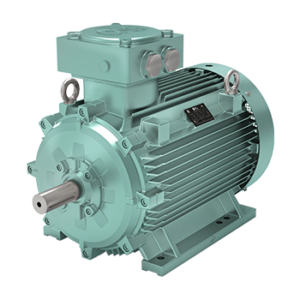
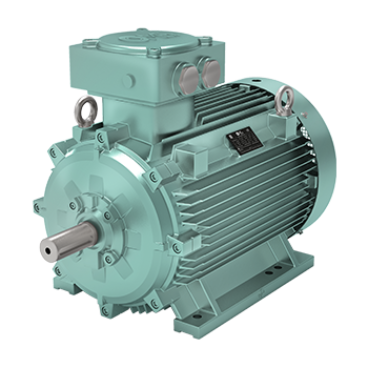
An explosion-proof electric motor is a motor built to contain any spark or explosion that occurs inside its enclosure, preventing it from igniting flammable gases, vapors, or dust in the surrounding atmosphere. It is required in hazardous locations such as oil and gas facilities, refineries, petrochemical plants, and water treatment sites. OME Motors manufactures the OMNEX series of NEMA explosion-proof motors, with cast-iron construction engineered for demanding hazardous-area applications.

How are explosion-proof motors classified for hazardous locations?

In the United States, hazardous locations are classified under the National Electrical Code (NEC/NFPA 70) using a system of Class, Division, and Group. Class identifies the hazardous material (Class I for gases and vapors, Class II for combustible dust, Class III for fibers), Division indicates how often the hazard is present, and Group specifies the particular gas or dust. A motor must be rated for the exact Class, Division, and Group of the area where it will operate.

What is the difference between Class 1 Division 1 and Class 1 Division 2?

Class 1 Division 1 covers areas where flammable gases or vapors are present under normal operating conditions, while Class 1 Division 2 covers areas where they are present only under abnormal conditions, such as a leak or equipment failure. Division 1 environments require the highest level of protection. Selecting a motor rated for the correct Division is essential for both safety and code compliance, and OME Motors supports customers in matching the right motor to each area classification.

Is a TEFC motor the same as an explosion-proof motor?

No. A TEFC (Totally Enclosed Fan-Cooled) motor is sealed against dust and moisture but is not designed to contain an internal explosion, so it is not suitable for hazardous locations on its own. An explosion-proof motor is purpose-built and certified to contain and quench an internal ignition. A standard TEFC motor should never be substituted for a properly rated explosion-proof motor in a classified area.

What is the difference between the Class/Division and Zone systems?

The Class/Division system is the traditional North American method for classifying hazardous locations, while the Zone system is the international approach (Zone 0, 1, and 2 for gases) and is now also recognized by the NEC. Many global projects and EPC contractors specify Zone ratings. OME Motors manufactures motors aligned with both North American and international standards, helping US operators meet requirements on domestic and cross-border projects.

What do UL and CSA certifications mean for an electric motor?

UL (Underwriters Laboratories) and CSA (Canadian Standards Association) are recognized testing and certification bodies in the United States and Canada. A UL or CSA listing confirms that a motor has been independently tested and meets applicable safety standards, which is often required by inspectors, insurers, and project specifications. OME Motors offers a dedicated line of UL/CSA motors for customers operating in North American markets.

What does the NEMA Premium efficiency rating mean?

NEMA Premium is an efficiency designation for electric motors that meet the high-efficiency performance levels defined by the National Electrical Manufacturers Association. A NEMA Premium motor consumes less energy than a standard-efficiency motor of the same rating, lowering operating costs and energy consumption over the motor’s service life. OME Motors produces high-efficiency NEMA motors designed to reduce total cost of ownership.

What are NEMA motor frame sizes?

NEMA frame sizes are standardized dimensions defined by NEMA that specify a motor’s mounting dimensions, shaft size, and overall footprint. Standardized frames make it easier to specify, install, and replace motors without redesigning the equipment around them. OME Motors builds motors to NEMA frame standards so US customers can integrate them into existing systems with confidence.

What is the difference between low-voltage and high-voltage industrial motors?

Low-voltage motors typically operate up to 600 V in North America and cover the majority of standard industrial applications. High-voltage motors run at higher voltages and are used for large power ratings and heavy-duty service, where they deliver better efficiency and lower line currents. OME Motors offers both, including high-voltage series and the OMA slip-ring high-voltage motor for demanding applications.

Can OME Motors build custom electric motors for specific applications?

Yes. In addition to a catalog of more than 50 standard models, OME Motors designs and manufactures highly customized electric motors built to the customer’s technical specifications. Customization can cover power rating, voltage, mounting configuration, type of protection, materials, and adaptations for specific industries, meeting requirements that standard motors cannot.

Which industries do OME Motors electric motors serve?

OME Motors serves a wide range of industries, including oil and gas, petrochemical, pipelines, water and wastewater treatment, mining, steel, and heavy industry. Their motors are used on compressors, pumps, industrial fans, conveyor systems, rolling mills, HVAC equipment, and smoke extraction systems, with solutions engineered for each operating environment.

What makes OME Motors a reliable electric motor manufacturer?

OME Motors has more than sixty years of experience in electrical machines and is a recognized name in the design and production of industrial electric motors worldwide. The company combines in-house quality control by its own technicians, compliance with IEC and NEMA standards, a broad range of certified hazardous-area products, and the ability to engineer custom solutions for different applications and markets.