



The beating heart of modern steel manufacturing
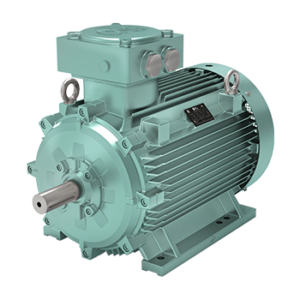
The steel industry never sleeps. At the center of every steel mill, the rolling process transforms massive incandescent slabs into finished products with millimeter precision. In this scenario, electrification is not just a technical option, but the backbone of entire production. The ability to move massive rolls against the resistance of hot metal requires power that goes beyond ordinary industrial understanding. Here, the choice of a heavy duty electric motor for steel plants makes the difference between a profitable operation and one constantly down for maintenance.
The main challenge lies in the so-called peak load. During rolling, the electric motor for rolling mill does not work linearly. There is a critical moment, defined as the bite phase, when the material enters between the rolls and requires an immediate explosion of torque. This hardware stress is the ultimate test for every component. But how do you choose and optimize these motors to eliminate downtime and maximize yield? In this article, we will explore exactly how to dominate the harshest stresses, analyzing the technologies that ensure continuity and power for your plant.
Engineering Resilience and the Need for Heavy Duty Industrial Electric Motors
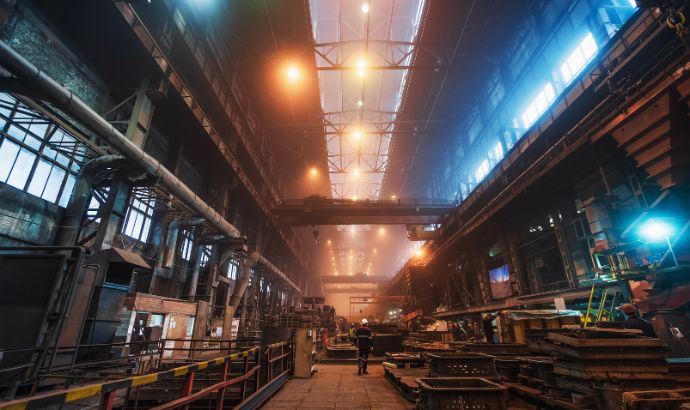
Steel mills are hostile environments. Temperatures exceeding 50 degrees Celsius in motor areas, abrasive scale dust, and constant mechanical vibrations create an ecosystem that would destroy any standard equipment. For this reason, the industry specifically requires heavy duty industrial electric motors designed with reinforced frames and superior class insulation systems.
The Extreme Environment and Torque Management
The design of these motors must account for unique environmental and mechanical factors:
- High ambient temperatures that accelerate insulation degradation.
- Conductive and abrasive dusts that can penetrate circuits if not properly sealed.
- Vibrations resulting from the mechanical impact of metal on rolls.
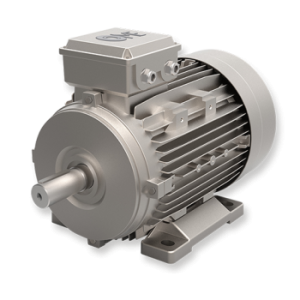
An often underestimated aspect is the difference between constant load and the bite phase. While the motor may run at steady state during transport, the transition to active rolling requires a premium electric motor for heavy duty capable of managing huge current peaks without overheating. Technological evolution has brought us from crude, oversized solutions to intelligent systems that balance efficiency and raw power, drastically reducing mechanical wear.
Which Motor Is Generally Used in Rolling Mills?
One of the most frequent questions among plant managers is: Which motor is used for rolling mills? The answer has changed drastically over the past twenty years, shifting from absolute DC dominance to AC flexibility. However, the choice depends strictly on the specific application, whether it is a hot rolling mill, cold rolling mill, or reversible mill.
The DC Legacy in Rolling Applications
The rolling mill DC motor was for decades the industry standard. The reason is simple: easy speed control and extremely high starting torque at low RPM. In a context where it is necessary to regulate roll rotation speed with millimeter precision to prevent the steel strip from tearing or accumulating, DC motors offered unbeatable performance. Even today, many existing plants prefer a DC motor used in rolling mills for its robustness and the simplicity of legacy control systems.
The AC Revolution and Slip-Ring Motors
Today, however, the trend is clearly oriented toward efficiency. The introduction of Variable Frequency Drives (VFD) has allowed the AC rolling mill motor to compete with and surpass old DC systems. Modern AC motors offer reduced maintenance, having no brushes or commutators to wear out, and deliver significant energy savings.
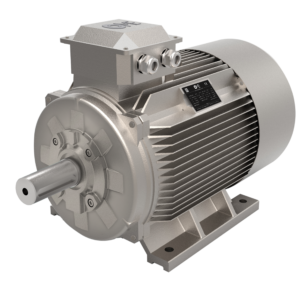
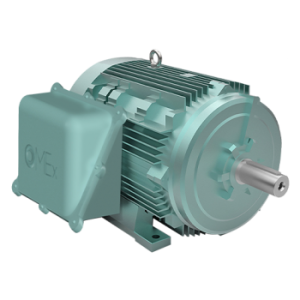
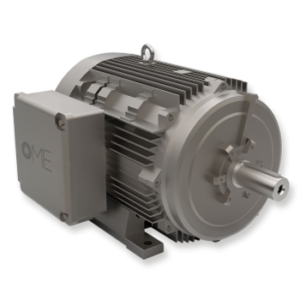
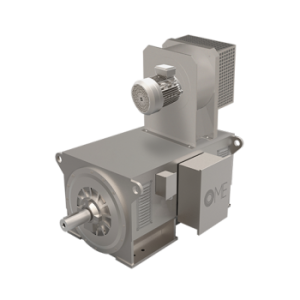
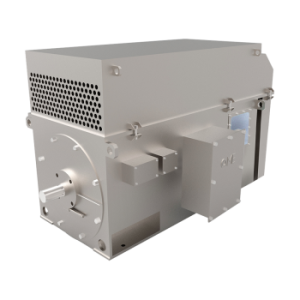
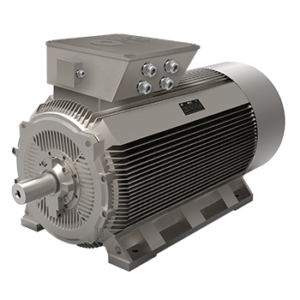
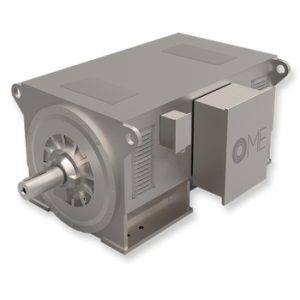
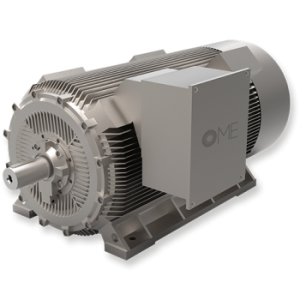
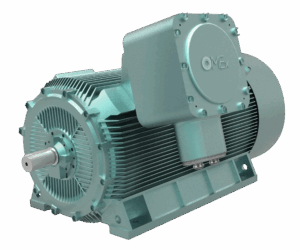
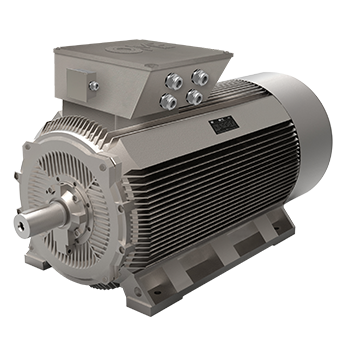
When asking which type of motor is used in rolling mills for new projects, the answer almost always points to asynchronous or synchronous motors powered by high-performance inverters. Specifically, for applications requiring exceptional starting torque and management of extremely high inertia loads, the OMA High Voltage slip-ring motor from OME Motors represents technological excellence. This type of motor allows limiting starting currents while simultaneously delivering maximum mechanical power, making it ideal for the most demanding rolling processes where grid stability and brute force must coexist.
To understand which electric motors used in rolling mills are most suitable for your needs, it is necessary to map performance: AC motors excel in speed and energy efficiency, while DC motors remain a valid choice for specific applications requiring extremely high constant torque in limited spaces. Ultimately, the choice of a modern motorized rolling mill drive must integrate not only power, but also the ability to communicate with the most advanced automation systems.
Peak Load Optimization Strategies
Managing a motorized rolling mill means constantly balancing productivity with machine health. Under extreme load, the number one enemy is heat. Without proper thermal management, even the best electric motors for heavy-duty use can fail within months.
Thermal Management and Overload Capacity
Advanced cooling systems are essential. Systems range from simple forced ventilation to closed-circuit air-to-water cooling. The latter allow maintaining winding temperatures within safe limits even during the tightest rolling cycles. Another critical factor is overload capacity. A properly designed motor for this sector must be able to sustain torque peaks up to 250 percent or 300 percent of its rated capacity for short periods. This safety margin ensures that the motor does not stall abruptly when encountering variations in thickness or temperature of the metal being processed.
The Excellence of OME Motors: Custom Solutions for Global Steelmaking
In a global market where operational continuity is the only true competitive advantage, OME Motors stands out as a strategic partner for the most demanding steel mills. Our Italian manufacturing is not just a mark of origin, but a guarantee of construction quality applied to every single heavy duty electric motor that leaves our facilities. We design machines built to last decades, reducing total cost of ownership through engineering that makes no compromises.
Bespoke Engineering and Guaranteed Performance
The added value of OME Motors lies in the ability to go beyond standard. We know that every rolling mill train has its peculiarities, which is why we have specialized in supplying rolling mill motors designed to measure. Whether replacing an old DC motor with a high-efficiency AC system or integrating IoT sensors for predictive maintenance, our premium electric motors for heavy duty are designed to integrate perfectly into existing production processes.
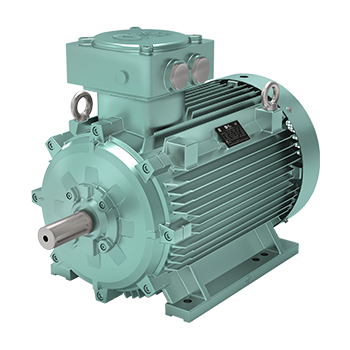
Relying on OME Motors means choosing the reliability of a heavy duty electric motor manufacturer that successfully distributes worldwide, bringing Italian technological innovation directly into the heart of the hottest areas of industrial production. Our range of electric motor for heavy duty vehicles and industrial applications is designed to operate with superior insulation class and customized cooling systems, ensuring that peak loads are no longer a risk to your productivity, but a challenge won every day.
The Future of High-Performance Rolling
Performance optimization under peak load is no longer just a matter of iron and copper, but of design intelligence and material quality. Investing today in OME Motors drive systems means preparing for a future where energy efficiency and market demand response speed will be the only true drivers of growth.
Reducing carbon footprint and operating costs in steel production inevitably passes through the use of more efficient and resistant motors. With OME Motors, rolling excellence is guaranteed by technology that speaks the language of modern industry: reliability, power, and innovation without boundaries.
































 Headquarter - Via Camillo Golgi 8 - 25064 GUSSAGO (BS)