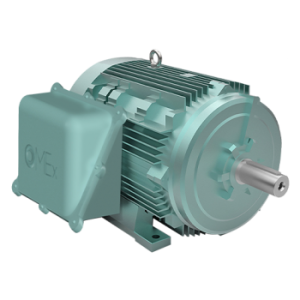
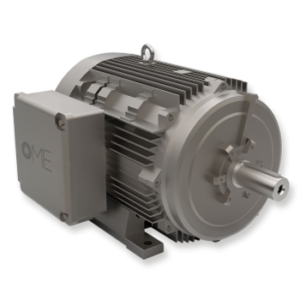
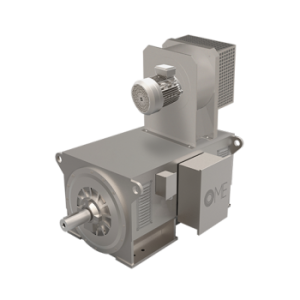
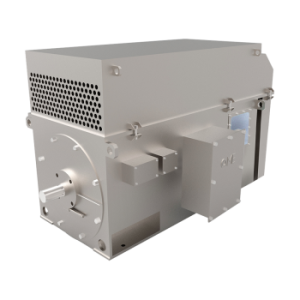
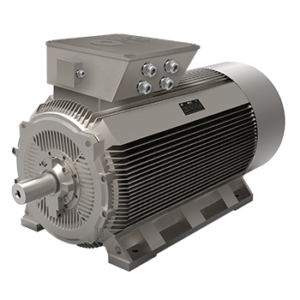
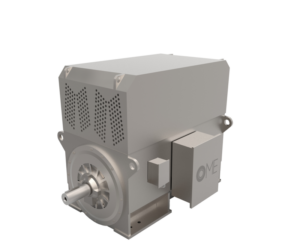
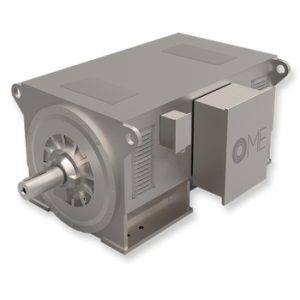
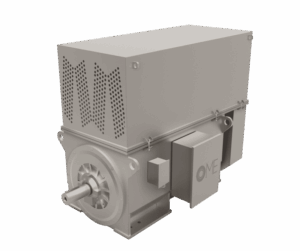
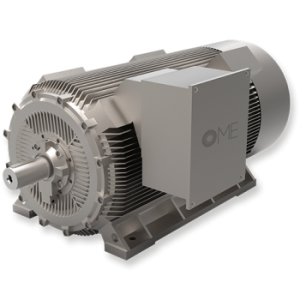
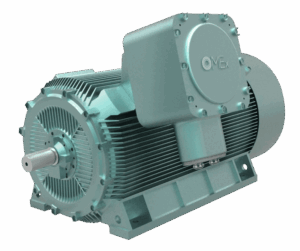
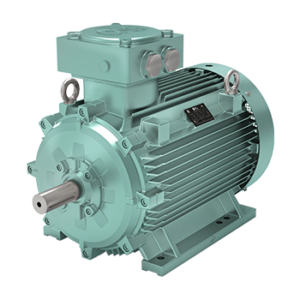
When your power generation depends on precise, stable frequency, the generator cannot be the weak link. A drop in output quality can trip protection systems, disrupt a process, or damage downstream equipment. That is why operators in power generation, cogeneration and renewables specify synchronous generators: they lock rotation speed to the electrical frequency and deliver the constant, high-quality output that critical infrastructure demands.
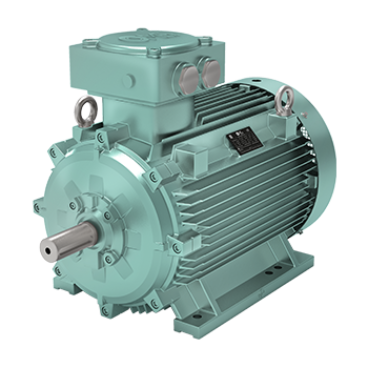
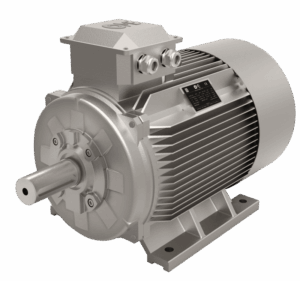
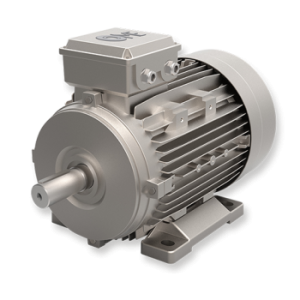
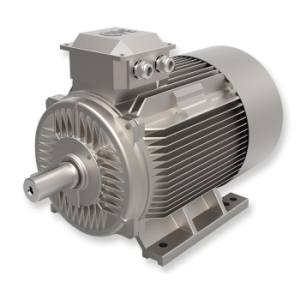
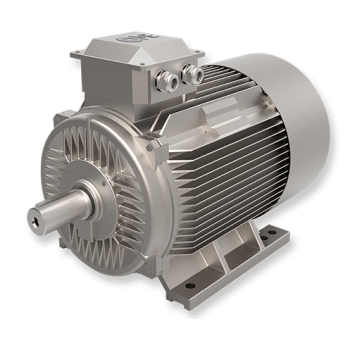
OME Motors designs and builds three-phase synchronous generators engineered for power plants, cogeneration units, wind power and turbine coupling. Our range spans 160 kW to 3,250 kW, 400 to 6,600 V, at 50 or 60 Hz, with IC01, IC611 or IC81W cooling depending on the model. Every unit is built and tested in-house and can be supplied to standard specifications or fully customized to the application.
What is a synchronous generator?
A synchronous generator produces alternating current whose rotation speed is synchronized with the electrical frequency of the grid. The rotor carries magnetic poles fed by direct current (or supplied by permanent magnets motors); as it turns, the rotating magnetic field induces voltage in the stator windings. Because the machine runs in step with the grid, it can regulate voltage and reactive power independently – the key reason synchronous generators are chosen for primary power generation rather than induction machines.
Permanent magnet synchronous generators (PMSG)
For applications that demand the highest efficiency and controllability, OME offers permanent magnet synchronous generators. By replacing the wound field with permanent magnets, a PMSG eliminates field losses and rotor excitation power, raising overall efficiency and reducing maintenance. PMSG designs perform especially well at partial and variable speed, which makes them a strong fit for wind turbines and modern cogeneration systems.
Brushless, self-excited design: key advantages
OME synchronous generators are brushless and self-excited, built for reliability and low maintenance over a long service life. Typical advantages include:
- Maximum reliability and stable, precise rotation speed;
- Brushless AC design with simple operation and maintenance;
- Drip-proof construction and a high power-to-weight ratio;
- Low rotor inertia for fast acceleration;
- High efficiency, including PMSG configurations.
When paired with a static converter, our synchronous generators can also handle variable-speed loads, and they can serve as a diesel-equivalent power source where a particularly stable and precise output is required.
Technical range and specifications
OME three-phase synchronous generators are available across a broad envelope of power and voltage to match the plant. Standard ratings run from 160 kW up to 3,250 kW, 400/6,600 V, 50/60 Hz, with cooling and construction (IC01, IC611, IC81W) selected for the duty and environment. Nameplate documentation – kVA, kW, voltage, frequency, power factor, rpm, poles, insulation class and cooling method – is provided with every unit.
Applications and industries
With their stable, high-quality output, OME synchronous generators are ideal for power plants, cogeneration facilities, wind power generation and turbine coupling. They are also used in transportation systems and in industrial processes that require precise speed and energy control, such as paper mills and steelworks – anywhere a constant, reliable power supply is essential.
Request a quote
Pricing depends on power rating, voltage, cooling, construction and the level of customization required, so we provide a dedicated quote for each application. Contact our engineering team to find the right synchronous generator – standard or custom – for your project.
FAQ – Three-Phase Synchronous Generators
What is the difference between a synchronous and an induction (asynchronous) generator?
A synchronous generator runs at a speed locked to the grid frequency and can regulate voltage and reactive power independently, which is why it is preferred for primary power generation. An induction (asynchronous) generator is simpler and lower-cost but relies on the grid for excitation and cannot control voltage on its own. OME builds synchronous generators for applications that require stable, high-quality output.
What are the advantages of a permanent magnet synchronous generator (PMSG)?
A PMSG uses permanent magnets instead of a wound field, removing field losses and excitation power to raise efficiency and cut maintenance. It performs very well at partial and variable speed, making it well suited to wind turbines and cogeneration. OME can supply PMSG configurations tailored to the application.
How do I read a synchronous generator nameplate?
The nameplate lists the ratings you need to match the generator to your system: apparent power (kVA), real power (kW), voltage, frequency (50/60 Hz), power factor, rated speed (rpm), number of poles, insulation class and cooling method (e.g. IC01, IC611, IC81W). OME provides full nameplate documentation with every unit.
{“@context”:”https://schema.org”,”@type”:”FAQPage”,”mainEntity”:[{“@type”:”Question”,”name”:”What is the difference between a synchronous and an induction (asynchronous) generator?”,”acceptedAnswer”:{“@type”:”Answer”,”text”:”A synchronous generator runs at a speed locked to the grid frequency and can regulate voltage and reactive power independently, which is why it is preferred for primary power generation. An induction (asynchronous) generator is simpler and lower-cost but relies on the grid for excitation and cannot control voltage on its own. OME builds synchronous generators for applications that require stable, high-quality output.”}},{“@type”:”Question”,”name”:”What are the advantages of a permanent magnet synchronous generator (PMSG)?”,”acceptedAnswer”:{“@type”:”Answer”,”text”:”A PMSG uses permanent magnets instead of a wound field, removing field losses and excitation power to raise efficiency and cut maintenance. It performs very well at partial and variable speed, making it well suited to wind turbines and cogeneration. OME can supply PMSG configurations tailored to the application.”}},{“@type”:”Question”,”name”:”How do I read a synchronous generator nameplate?”,”acceptedAnswer”:{“@type”:”Answer”,”text”:”The nameplate lists the ratings you need to match the generator to your system: apparent power (kVA), real power (kW), voltage, frequency (50/60 Hz), power factor, rated speed (rpm), number of poles, insulation class and cooling method (e.g. IC01, IC611, IC81W). OME provides full nameplate documentation with every unit.”}}]}



























































 Headquarter - Via Camillo Golgi 8 - 25064 GUSSAGO (BS)