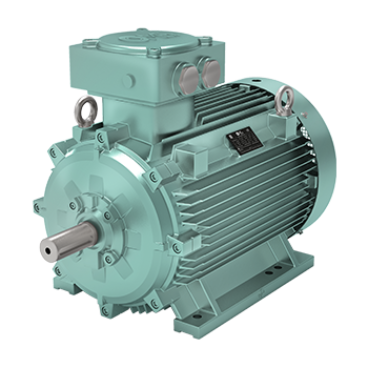

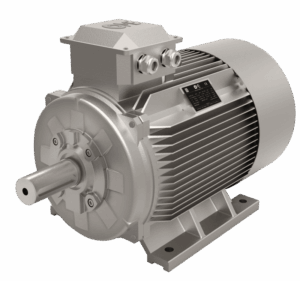
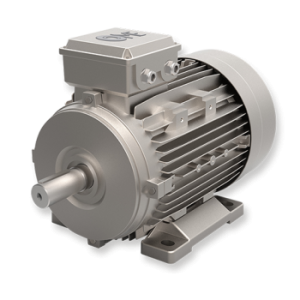
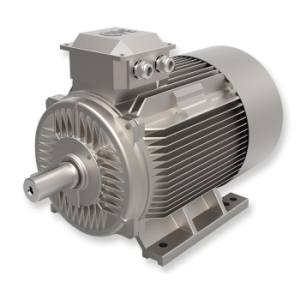
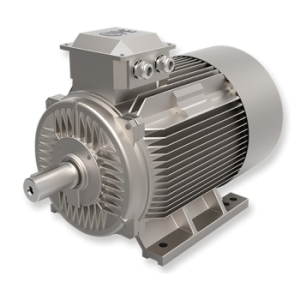
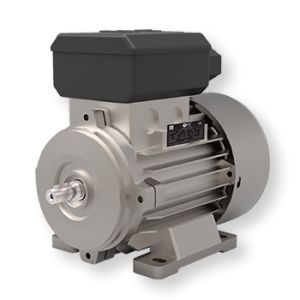
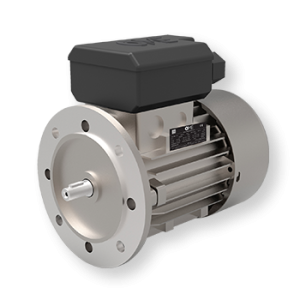
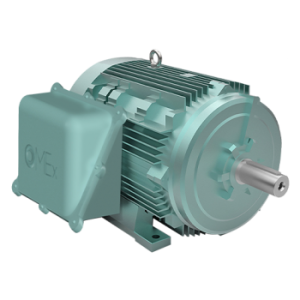
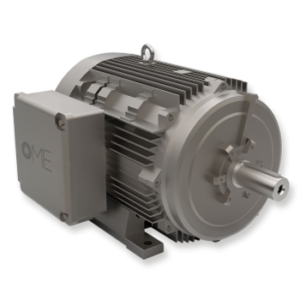
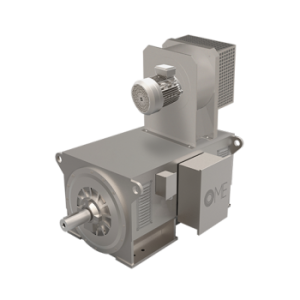

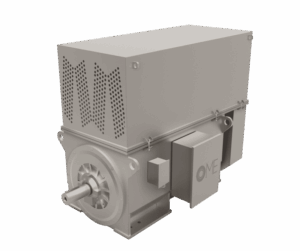
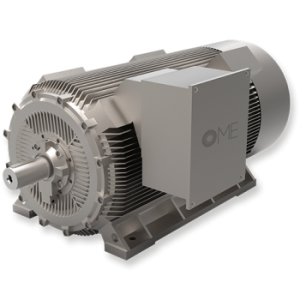
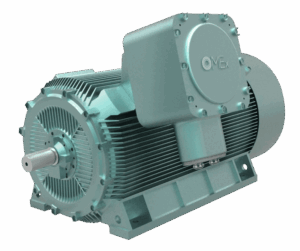
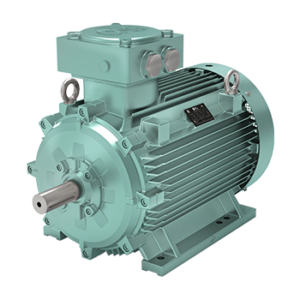
A multinational engineering team is finalizing the motor specification for a new gas processing facility. The plant will be built in Saudi Arabia, owned by an American operator, with EPC contracts split between a European prime contractor and a North American subcontractor. The hazardous area motors must satisfy ATEX, IECEx and NEC Class/Division requirements at the same time. The procurement manager has six weeks to qualify suppliers. A single misalignment in certification documents can delay the project by months.
This is not a hypothetical scenario. It is the daily reality of capital projects in Oil & Gas, petrochemical, water treatment, marine, and mining. Hazardous location motors sit at the intersection of three regulatory worlds — European ATEX, the international IECEx scheme, and the North American NEC Class/Division system — and they don’t always speak the same language.
This guide is a working reference for engineering managers, procurement leads, and compliance officers who specify or qualify motors for hazardous areas. It explains each framework, where they overlap, where they don’t, and how to make decisions on multi-region projects without exposing your team to compliance risk.
Why hazardous location motor certification matters
A hazardous location motor is an electric motor designed and certified to operate safely in areas where flammable gases, vapors, mists, or combustible dusts may be present. The certification is not a marketing label — it is the result of a third-party testing process verifying that the motor cannot become an ignition source under defined fault conditions.
The cost of non-compliance
A motor without proper certification documentation cannot be installed in a regulated hazardous area, period. The cost of getting it wrong is measured in:
- Project delays: replacing non-compliant equipment after delivery can push start-up dates by months.
- Insurance and liability exposure: in case of incident, non-compliance voids insurance coverage and exposes plant owners and EPC contractors to legal action.
- Fines and shutdowns: regulators (HSE in the UK, OSHA in the US, equivalent bodies elsewhere) can impose substantial fines and shut down operations.
- Reputation damage: for EPC contractors, a compliance failure on one project can affect bidding qualification on the next.
Where hazardous location motors are required
Oil & Gas (upstream extraction, FPSO units, refineries, pipelines), petrochemical plants, fuel storage and distribution, chemical processing, pharmaceutical manufacturing with solvents, marine vessels (engine rooms, cargo handling), water treatment plants handling biogas, mining (underground and surface), grain handling, sugar refining, and any industrial process generating combustible dust.
Understanding ATEX: the European framework
ATEX is the colloquial name for two European directives: the ATEX Equipment Directive 2014/34/EU, which regulates equipment placed on the market, and the ATEX Workplace Directive 1999/92/EC, which regulates the workplace itself. Together they form the European legal framework for explosive atmospheres.
Zone classification
ATEX classifies hazardous areas into zones based on the probability of an explosive atmosphere being present:
For gases, vapors and mists:
- Zone 0: explosive atmosphere is present continuously or for long periods.
- Zone 1: explosive atmosphere is likely to occur in normal operation occasionally.
- Zone 2: explosive atmosphere is not likely to occur in normal operation but, if it does, only briefly.
For combustible dusts:
- Zone 20, 21, 22: same logic applied to dust atmospheres.
Equipment categories
ATEX Directive 2014/34/EU defines equipment categories that match the zones:
- Category 1 equipment is suitable for Zone 0 / Zone 20.
- Category 2 equipment is suitable for Zone 1 / Zone 21 (and the more severe Zone 2 / Zone 22).
- Category 3 equipment is suitable for Zone 2 / Zone 22 only.
Industrial motors are typically certified for Category 2 (Zone 1) or Category 3 (Zone 2). Category 1 motors for Zone 0 are rare and specialized.
ATEX motor protection types
The motor itself must be designed with a specific protection method that prevents ignition. The most commonprotection types for ATEX explosion-proof motors are:
- Ex d (Flameproof Enclosure, IEC 60079-1): the enclosure contains any internal explosion and prevents flame propagation to the surrounding atmosphere. The most common protection type for Zone 1 motors.
- Ex de: combined flameproof enclosure (Ex d) for the main motor housing and increased safety (Ex e) for the terminal box. A frequent choice for medium and large motors.
- Ex e (Increased Safety, IEC 60079-7): the motor is constructed with measures to prevent the occurrence of arcs, sparks, or excessive temperatures, even under fault conditions.
- Ex nA (Non-sparking, IEC 60079-15): only for Zone 2. The motor cannot produce sparks or hot surfaces in normal operation.
Reading an ATEX motor nameplate
An ATEX nameplate carries a coded sequence that fully identifies the certification. Example: II 2G Ex db IIB T4 Gb:
- II = equipment group for surface industries (not mining)
- 2G = Category 2, gas atmospheres
- Ex = explosion protection marking
- db = flameproof enclosure (the lowercase letter indicates the Equipment Protection Level, EPL)
- IIB = gas group (covers ethylene and similar)
- T4 = maximum surface temperature 135 °C
- Gb = Equipment Protection Level for gas, suitable for Zone 1
Procurement teams should learn to read these codes — they are the contract between specification and delivery.
Understanding IECEx: the global recognition framework
IECEx (International Electrotechnical Commission System for Certification to Standards Relating to Equipment for Use in Explosive Atmospheres) is an international voluntary certification scheme. It does not replace national regulations; it provides a system of mutual recognition between participating countries.
How IECEx works
A manufacturer submits its product to one of the IECEx accredited certification bodies. The product is tested against IEC 60079 standards (the international standard family for explosive atmospheres). If approved, the certificate is recognized by all IECEx member countries — currently more than 30, including most major industrial nations outside North America.
Why IECEx matters for global EPC projects
When a project spans multiple countries, IECEx certification reduces the documentation burden dramatically. Instead of obtaining separate national certifications for each destination, a single IECEx certificate satisfies the requirements of all member states. For EPC contractors managing global projects, IECEx is the passport that allows the same motor to ship to multiple sites with consistent documentation.
Relationship between ATEX and IECEx
Technically, ATEX and IECEx are very close: both rely on the IEC 60079 standard family. A motor certified to IECEx can almost always also receive ATEX certification with minor additional documentation. The two schemes differ in the legal status:
- ATEX is legally mandatory for products sold in the European Union and EEA countries.
- IECEx is voluntary, but it is increasingly required by global plant owners as a procurement standard.
ATEX vs IECEx: the key differences procurement should know
A common mistake in multi-region projects is treating ATEX and IECEx as interchangeable. They are not. Three key differences matter operationally.
Geographic enforcement. ATEX is European law. IECEx is global voluntary recognition. A motor with IECEx certification but no ATEX certification cannot legally be installed in an EU country. The reverse situation — ATEX-only without IECEx — can be acceptable for EU-only projects but is a red flag for global projects.
Documentation requirements. Both schemes require detailed certification dossiers, but the documents are structured differently. ATEX requires a Declaration of Conformity plus a notified body certificate. IECEx provides a single IECEx Certificate of Conformity (CoC) that incorporates all test reports. In practice, suppliers serving the global market provide both.
Cost and timing implications. Certifying a motor to both ATEX and IECEx adds 4-8 weeks to product development compared to either scheme alone, and increases certification costs. Suppliers with both certifications in their portfolio (such as OME Motors’ OMEX low voltage line and OMEX high voltage line) eliminate this overhead for the customer.
North American standards: NEC Class and Division system
North America (United States and Canada) uses a parallel but distinct system for hazardous location classification, codified primarily in the National Electrical Code (NEC, NFPA 70) in the US and the Canadian Electrical Code (CEC) in Canada. Equipment is certified by recognized testing laboratories — UL (Underwriters Laboratories) in the US and CSA in Canada — with mutual recognition between the two. OME offers a dedicated line of UL/CSA certified electric motors for the North American market.
Class, Division, and Group
The NEC Class/Division system uses three dimensions to classify hazardous areas:
- Class identifies the type of hazard:
- Class I: flammable gases, vapors, or liquids
- Class II: combustible dusts
- Class III: ignitable fibers or flyings
- Division identifies the probability of the hazard:
- Division 1: hazard is present in normal operation
- Division 2: hazard is present only under abnormal conditions
- Group identifies the specific material:
- Groups A, B, C, D for gases (A = acetylene, B = hydrogen, C = ethylene, D = propane and similar)
- Groups E, F, G for dusts
Mapping NEC to IEC zones
In 1996, the NEC introduced an alternative Zone system (Class I, Zone 0/1/2) that aligns more closely with IEC standards, but the traditional Class/Division system remains dominant in the US. Procurement teams should be ready to specify either, depending on the operator’s preference.
NEMA enclosure standards and UL/CSA certification
NEMA enclosure ratings (NEMA 4, 4X, 7, 9, etc.) are the North American counterpart to IP ratings. NEMA 7 enclosures, for example, are explosion-proof enclosures suitable for Class I locations. UL listing and CSA certification provide the assurance that the motor has been third-party tested to the applicable NEC and CEC requirements.
OME Motors’ OMNEX explosion-proof NEMA motors are designed specifically for North American hazardous locations, with UL/CSA-listed motors certified for Class I Division 1 and Division 2. The complementary range of NEMA Premium efficiency motors covers standard (non-hazardous) North American applications.
ATEX, IECEx, NEC: comparison matrix
The three frameworks address the same risks but use different vocabularies. The table below provides the practical equivalence procurement teams need:
| IEC/ATEX Zone | NEC Class/Division equivalent | Probability of hazardous atmosphere |
| Zone 0 (gas) | Class I, Division 1 (continuous portion) | Continuous or long periods |
| Zone 1 (gas) | Class I, Division 1 | Likely in normal operation |
| Zone 2 (gas) | Class I, Division 2 | Not likely in normal operation |
| Zone 20 (dust) | Class II, Division 1 (continuous portion) | Continuous or long periods |
| Zone 21 (dust) | Class II, Division 1 | Likely in normal operation |
| Zone 22 (dust) | Class II, Division 2 | Not likely in normal operation |
Note: the equivalence is conceptual, not legal. A motor certified to ATEX Zone 1 is not automatically accepted as Class I Division 1 — separate UL/CSA certification is required for installation in the US or Canada.
How to choose a hazardous location motor for a multi-region project
Multi-region procurement requires a structured approach. Skipping any of these four steps is the most common source of late-stage compliance issues.
Step 1: define the area classification at site. The hazardous area classification is determined by the plant owner or licensee based on a hazardous area study (HAC). This study identifies which zones (or Class/Division/Groups) apply to each piece of equipment. The motor specification follows from the area classification, not the other way around.
Step 2: identify all applicable certifications. For each motor, list every certification that will be required by every site, every regulator, every insurance underwriter involved in the project. A single motor may need ATEX (for delivery to a European port), IECEx (for the destination country), and UL/CSA (for the operator’s compliance team based in the US).
Step 3: align with EPC contract requirements. The EPC contract typically specifies certification requirements explicitly. Review the technical specification documents carefully — particularly the section on “vendor qualification” — to identify any project-specific overlays beyond the regulatory baseline.
Step 4: verify supplier qualification documents. Before issuing a purchase order, obtain and verify the actual certificates from the supplier. Check certificate numbers against the issuing body’s database (ATEX certificates can be verified on notified body websites; IECEx certificates on the IECEx Online Certificate System; UL listings on UL’s Product iQ database). A certificate number that cannot be verified is a certificate that does not exist.
OMEX and OMNEX: OME Motors’ answer to global hazardous location requirements
OME Motors has been designing and manufacturing electric motors for hazardous locations for over fifty years. The portfolio addresses both worlds:
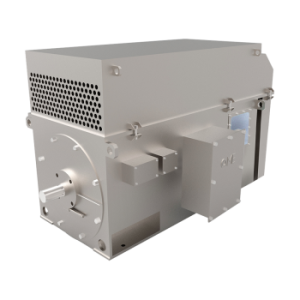
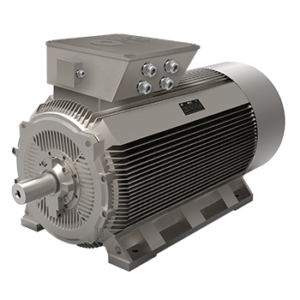
- OMEX is the line of explosion-proof motors certified to ATEX and IECEx, available inlow voltage and high voltage versions. Designed with Ex d and Ex de protection types, suitable for Zone 1 and Zone 2 applications across Oil & Gas, petrochemical, chemical processing, and pharmaceutical industries.
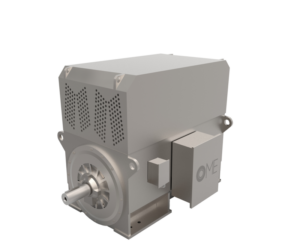
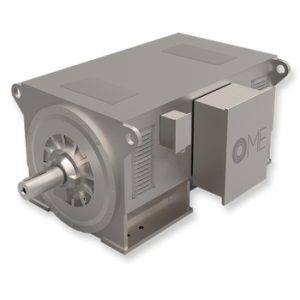
- OMNEX is the line ofexplosion-proof motors certified to NEMA / UL / CSA for the North American market, with motors suitable for Class I Division 1 and Division 2.
The complete catalog also includespermanent magnet motors andsynchronous generators for applications adjacent to hazardous areas.
Both OMEX and OMNEX lines can be customized in frame size, voltage class, efficiency class, and protection level, with documentation and quality dossiers tailored to EPC project requirements. OME Motors holds vendor qualifications with major oil & gas operators and EPC contractors worldwide, with proven installations across industrial fields and applications.
Specifying motors for a hazardous location project? Contact our engineering team for a consultation on aligning your specification with ATEX, IECEx, and NEC requirements.
Frequently asked questions about hazardous location motors
Not without additional certification. ATEX certification is legally recognized in the European Union and EEA countries. For installation in the US, the motor must hold a UL listing or equivalent third-party certification to NEC (NFPA 70) requirements. Many manufacturers offer motor families certified to both ATEX/IECEx and UL/CSA, but the certifications are issued separately.
ATEX is the European legal framework (Directive 2014/34/EU), mandatory for products sold in the EU. IECEx is a voluntary international certification scheme that provides mutual recognition between participating countries. Both rely on the IEC 60079 standard family, so the technical requirements are very similar — the difference is in legal status and documentation structure.
Ex = explosion protection. d = flameproof enclosure protection type. IIB = gas group (covers ethylene and similar substances). T4 = maximum surface temperature 135 °C. Together, this code identifies a motor with a flameproof enclosure suitable for atmospheres containing IIB-group gases at maximum 135 °C surface temperature.
Both are ATEX classifications for areas with potentially explosive gas, vapor, or mist atmospheres. Zone 1 is an area where an explosive atmosphere is likely to occur in normal operation — occasionally or periodically. Zone 2 is an area where an explosive atmosphere is not likely to occur in normal operation and, if it does, only briefly. Zone 1 areas require Category 2 equipment with stricter protection (typically Ex d or Ex de for motors), while Zone 2 areas can use Category 3 equipment (Ex nA or Ex e). Selecting the right Zone classification is the first step in motor specification for hazardous areas.
For products sold within the EU, ATEX is mandatory. IECEx is voluntary but is often required by global EPC contractors and major operators as a procurement standard. Many manufacturers obtain both certifications to maximize commercial flexibility — this is the case for OME Motors’ OMEX line.
For a custom motor based on an existing certified platform, the additional certification typically takes 4-8 weeks. For an entirely new design, the full ATEX certification process can take 4-6 months due to design review, prototype testing, and notified body review. This is a critical factor in project planning.
Always verify certificates against the issuing body’s public database before issuing a purchase order. For IECEx, use the IECEx Online Certificate System (iecex-certs.com) and search by certificate number — every valid IECEx Certificate of Conformity is listed. For ATEX, check the notified body’s certificate database (each notified body has a public registry; the four-digit notified body number on the nameplate identifies which one). For UL listings, use UL Product iQ (productiq.ulprospector.com) and search by file number or product. A certificate that cannot be verified in the official database should be treated as non-existent: ask the supplier to provide direct access or the verification link.
Yes. A motor certified for Zone 1 (Equipment Category 2) is also suitable for Zone 2 (the less severe area). The reverse is not true: a Zone 2-only motor (Category 3) cannot be installed in Zone 1.






























 Headquarter - Via Camillo Golgi 8 - 25064 GUSSAGO (BS)