

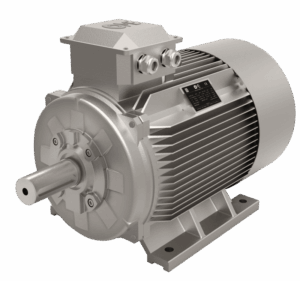
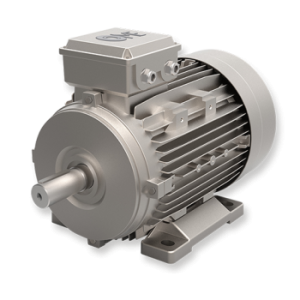
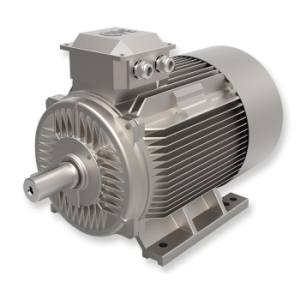
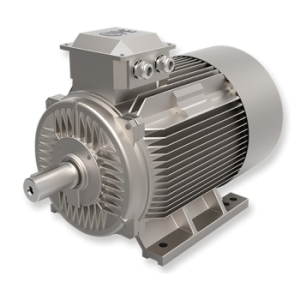
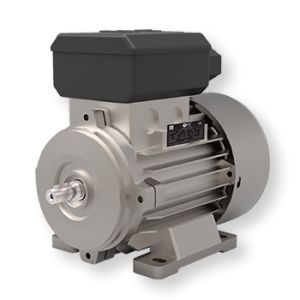
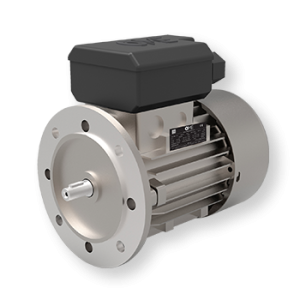
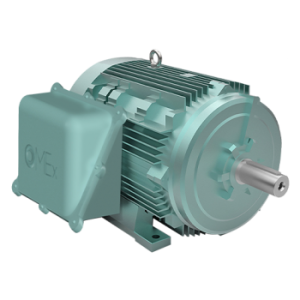
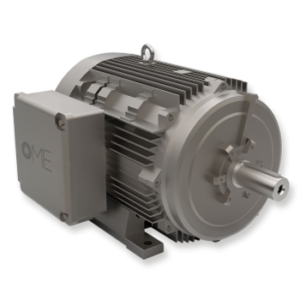

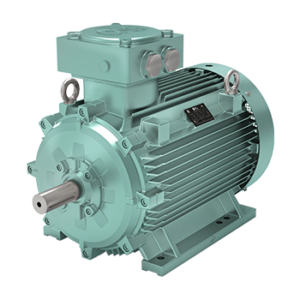
A permanent magnet synchronous motor — known by the acronym PMSM — is a three-phase AC electric motor in which the rotor magnetic field is generated by permanent magnets embedded in or mounted on the rotor itself, rather than induced by stator currents as in a conventional induction motor. The result is a machine that rotates exactly at the synchronous speed dictated by the supply frequency, with no rotor slip, achieving higher efficiency and greater power density than equivalent induction motors.
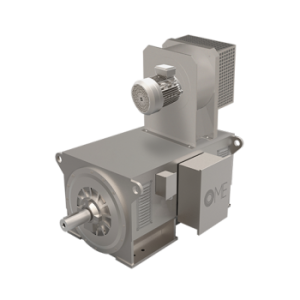
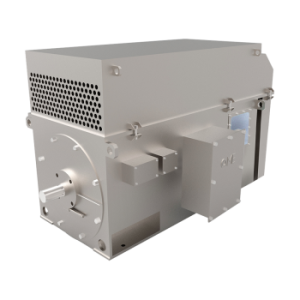
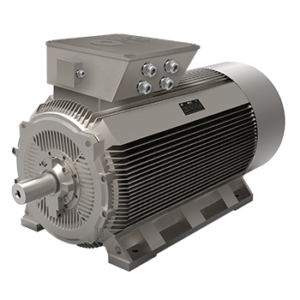
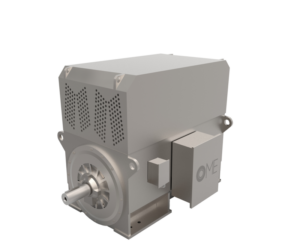
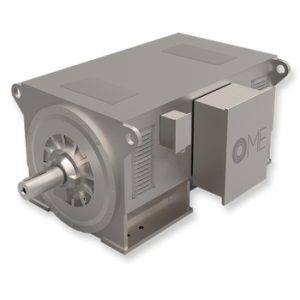
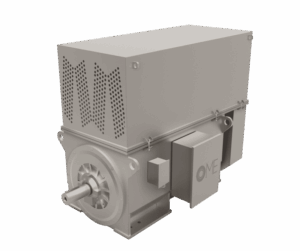
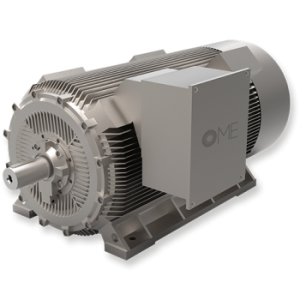
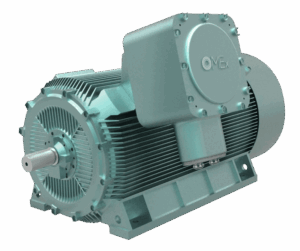
AtOME Motors we have been designing and manufacturing industrial PMSM motors in Italy for over six decades. The OMPM Ultra Premium Efficiency series — engineered specifically for variable speed industrial applications — exemplifies how the PMSM technology delivers measurable energy savings in pumping, ventilation, compression, and process industries.
This guide explains how a PMSM motor works, the difference between IPM and SPM configurations, the advantages over induction motors, and the typical industrial applications.
How a permanent magnet synchronous motor works
A PMSM motor consists of two main parts. The stator is identical to that of a conventional asynchronous motor: three-phase windings supplied by an alternating current generate a rotating magnetic field, whose speed depends on the supply frequency and the number of poles. The rotor carries permanent magnets — typically rare-earth alloys such as neodymium-iron-boron (NdFeB) or samarium-cobalt (SmCo) — which produce their own constant magnetic field. The rotor field locks rigidly onto the stator’s rotating field and follows it at exactly the synchronous speed.
Because the rotor field is supplied by the magnets rather than by induced currents, there are no rotor copper losses — the main inefficiency in induction motors. A PMSM motor therefore achieves full-load efficiency typically 2 to 4 percentage points higher than an equivalent IE4 induction motor, and maintains that efficiency advantage across a much wider load range.
Synchronous speed is given by ns = 60 × f / p, where f is the supply frequency in Hz and p is the number of pole pairs. A 4-pole PMSM motor at 60 Hz rotates exactly at 1,800 rpm — not 1,750 rpm with slip, as the equivalent induction motor would.
PMSM motor types: IPM vs SPM
Permanent magnet synchronous motors come in two main rotor configurations, each with distinct performance characteristics.
In a surface permanent magnet (SPM) motor, the magnets are mounted directly on the outer surface of the rotor. Construction is simpler and electromagnetic behavior is linear, with rotor inductance roughly equal along the d and q axes. SPM motors are well suited to applications operating at moderate speeds with prevalent constant-torque duty.
In an interior permanent magnet (IPM) motor, the magnets are embedded inside the rotor laminations. This configuration adds a reluctance torque component to the standard magnetic torque, broadening the constant-torque speed range, improving high-speed flux-weakening behavior, and providing greater mechanical robustness because the magnets are protected by the rotor body. The OMPM series manufactured by OME Motors is engineered with IPM technology precisely to meet the demands of industrial variable-speed applications, where wide speed range and high power density matter.
A third variant — the line-start PMSM (LSPM) — adds an auxiliary squirrel-cage rotor that allows direct-on-line starting from the three-phase supply. The motor starts as an induction motor and locks into synchronous operation at rated speed, combining the higher efficiency of the PMSM with the simplicity of direct line starting.
PMSM motor vs induction motor: Key differences
The two technologies differ on five engineering dimensions that drive selection in industrial procurement:
- Efficiency: PMSMs are typically 2–4 points more efficient than IE4 induction motors at full load, with a wider efficiency plateau at partial loads.
- Power density: for the same rated power, a PMSM is 20–30% smaller and lighter than an equivalent induction motor.
- Speed accuracy: PMSMs hold synchronous speed exactly, independent of load. Induction motors slip 2–5% under load.
- Starting: standard PMSMs require a variable frequency drive for starting. Induction motors start directly across the line.
- Power factor: PMSMs can operate at unity power factor or even deliver reactive power to the grid. Induction motors always absorb reactive power.
The cost trade-off is real: a PMSM motor typically costs 30–60% more than an equivalent IE4 induction motor, and in most cases requires a dedicated VFD. The investment is justified by the lifetime energy savings in applications with continuous duty and significant operating hours.
PMSM vs BLDC: Common confusion clarified
PMSM and BLDC (brushless DC) motors share the same physical construction — both have permanent magnets on the rotor and three-phase stator windings. The difference is in the drive waveform: a PMSM is driven with sinusoidal currents and produces smooth, low-vibration torque ideal for industrial applications; a BLDC is driven with trapezoidal currents, producing higher torque ripple but enabling simpler drive electronics. For industrial pumps, fans, compressors, and process applications, the PMSM is the engineered choice — which is why all OME Motors permanent magnet motors are built as PMSMs.
Industrial applications of PMSM motors
PMSM motors deliver value where three conditions converge: continuous-duty operation with many hours per year, the presence of variable speed control in the duty cycle, and a significant share of energy in operating costs. The sectors where these conditions consistently apply include:
- HVAC and air handling — large centrifugal fans in industrial and commercial HVAC systems
- Process pumping — variable-flow centrifugal pumps in water treatment, chemical processing, and refining
- Desalination — high-pressure reverse osmosis trains with 24/7 duty
- Centrifugal compressors — applications with variable compression ratio
- Food and beverage processing — mixers, homogenizers, and high-efficiency packaging systems
- Power generation auxiliaries — boiler feed pumps, cooling tower fans
For demanding applications, the OMPM series of permanent magnet motors by OME Motors is available from 0.75 kW up to 2,500 kW, with IC 81W water-to-air cooling, SKF long-life bearings, and full custom configuration including NEMA frame layouts on request.
The OME Motors PMSM approach
OME Motors has been manufacturing industrial electric motors in Brescia, Italy since 1967, supplying global oil and gas, petrochemical, refining, water treatment, and process industries. Each OMPM permanent magnet synchronous motor is custom-engineered to the project specification: rated power, frame, voltage winding, drive compatibility, thermal sensors, and certifications are all defined in collaboration with the customer’s engineering team.
To discuss whether a PMSM motor is the right choice for your application, or to request a project-specific evaluation, contact the OME Motors engineering team or explore the full electric motor range.





































































 Headquarter - Via Camillo Golgi 8 - 25064 GUSSAGO (BS)