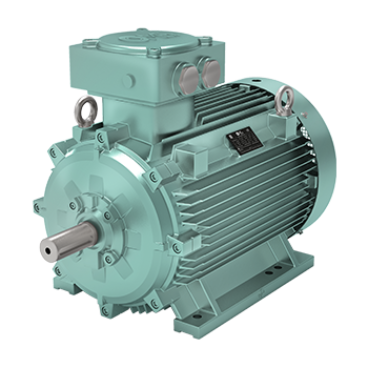

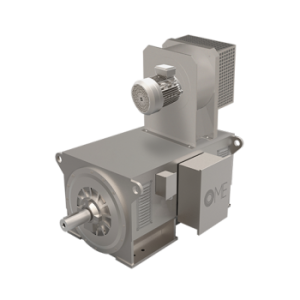
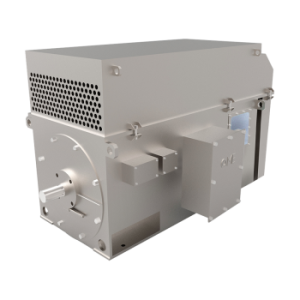
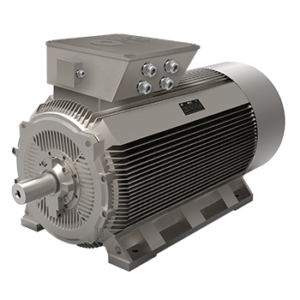

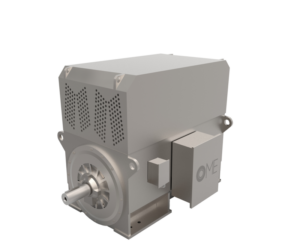
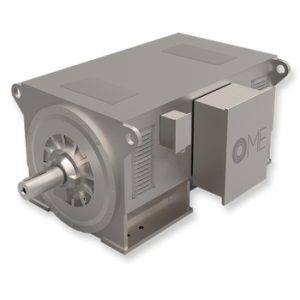
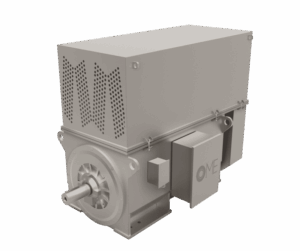
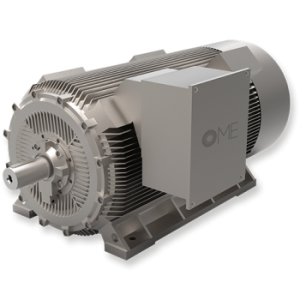
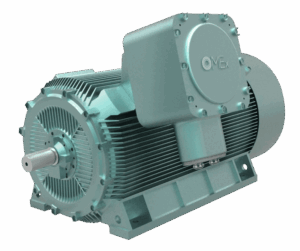
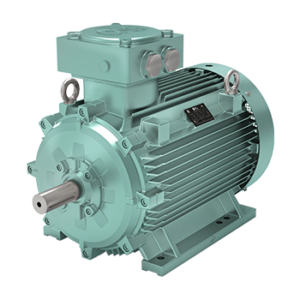
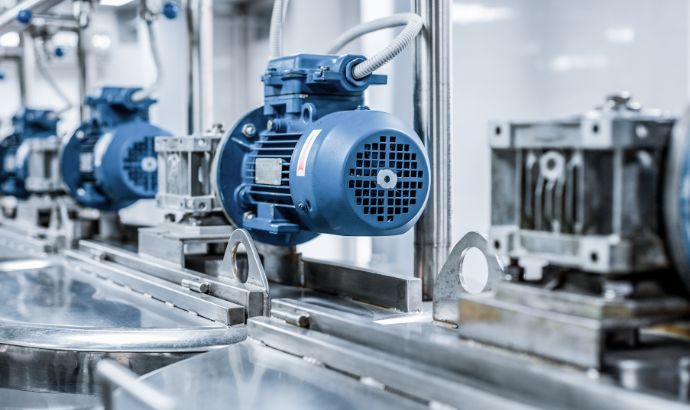
Specifying the right industrial electric motor for a plant, a machine, or a project involves more decisions than most procurement engineers face on any single component. Rated power, standards, efficiency class, enclosure protection, voltage and frequency, hazardous area certification, and duty cycle all interact — and the wrong choice on any one of them can mean a motor that does not fit, does not comply with local regulations, or does not deliver the operational efficiency the project business case assumed.
OME Motors has been designing and manufacturing industrial electric motors in Italy since 1967, supplying customers across oil and gas, petrochemical, water treatment, power generation, and heavy industry worldwide. Over decades of project engineering, we have condensed the selection process into a repeatable six-step framework — the same framework we use with our own customers when specifying custom industrial motors.
This buying guide walks through the six decisions that determine the right industrial electric motor for any application.
Step 1: Define the load profile and duty cycle
Every industrial electric motor selection starts with the load, not the motor. Three questions define the profile:
What type of load is being driven? Centrifugal pumps and fans follow variable-torque behavior — power varies with the cube of speed. Positive displacement pumps, compressors, and conveyors follow constant-torque behavior. Machine tools and cranes may require constant-power behavior over a wide speed range. Each pattern calls for a different motor configuration.
What is the duty cycle? The IEC standard defines duty cycles from S1 (continuous duty at rated load) through S10 (varying loads with defined thermal cycles). A motor sized for S1 continuous duty will overheat if applied to an S3 intermittent duty with frequent starts — and vice versa, an S3-rated motor is oversized (and overpriced) for a truly continuous application.
Are there frequent starts, reversals, or braking cycles? These impose thermal and mechanical stress far beyond the nameplate rating. Applications with more than 10-15 starts per hour typically require an oversized motor, a variable frequency drive, or a purpose-built configuration.
Step 2: Size the motor correctly
Once the load is characterized, electric motor sizing follows. Rated power must cover the required shaft power with a service factor margin — typically 15-25% above the calculated continuous power demand — plus any additional capacity needed for start-up and transient loads.
Rated speed should match the driven equipment through direct coupling, belt drive, or gearbox. Standard four-pole motors run at approximately 1,800 rpm at 60 Hz (US) or 1,500 rpm at 50 Hz (international); two-pole motors run twice as fast, six-pole motors at 60% of the four-pole speed, and so on.
Motor horsepower to kW conversion follows the relationship 1 HP ≈ 0.746 kW; a 100 HP motor is approximately 75 kW. This matters when specifying across regional markets where the units of measure differ.
Undersizing a motor risks premature failure and inability to meet process demand; oversizing wastes capital and reduces efficiency at partial load. OME Motors’ engineering team performs sizing calculations as part of the pre-quotation process for every custom project.
Step 3: Choose the electric motor efficiency
Efficiency class translates directly into lifecycle energy cost. For continuous-duty applications running 4,000 hours or more per year, the difference between an IE2 and an IE4 motor pays for itself in 2-4 years through reduced electricity consumption.
The two main efficiency labeling systems are NEMA Premium — used in North America under the US Department of Energy’s EPCA regulations — and the IEC ladder IE1 (Standard), IE2 (High), IE3 (Premium), IE4 (Super Premium), and IE5 (in development). NEMA Premium and IE3 are approximately equivalent at full load. IE4 exceeds both and is the emerging standard for new industrial projects.
For applications with continuous duty, variable speed, or exceptionally high operating hours, permanent magnet synchronous motors (PMSM) exceed IE4 efficiency by 2-4 percentage points across the full load range, delivering the best lifecycle economics available in industrial motor technology today.
Step 4: Select the standard — NEMA or IEC
The choice between NEMA and IEC standards is driven by the destination market, not the manufacturer. Motors installed in the United States, Canada, or Mexico should be built to NEMA standards — NEMA frame dimensions, 60 Hz windings, 460/480/575/600 V voltages, and UL/CSA certification for regulatory compliance. Motors installed in Europe, Asia, the Middle East, and most other markets should follow IEC standards — IEC 60072 frame dimensions, 50 Hz windings, and 400/690 V voltages.
For a detailed comparison of the two systems — including frame sizes, efficiency classes, enclosure ratings, and voltage differences — see our dedicated guide to NEMA vs IEC motor standards. OME Motors is one of the few European motor manufacturers producing to both NEMA and IEC standards, allowing multinational projects to source both configurations from a single supplier.
Step 5: Specify the enclosure and environment
The physical operating environment defines the protection class of the motor. Standard industrial motors are enclosed with fan cooling (TEFC — Totally Enclosed Fan-Cooled) and rated to at least IP55 under IEC or NEMA Type 12 under NEMA. Outdoor installations, wash-down environments, and coastal or offshore applications require higher protection — IP65/66 or NEMA Type 4X — with additional attention to bearings, seals, and cable entries.
Ambient operating temperature must be verified: standard motors are rated for -20°C to +40°C; extended ranges to +55°C or down to -50°C are available on request but require design modifications to insulation, bearings, and lubrication.
Step 6: Verify certifications for hazardous areas
If the motor is installed in a hazardous location — chemical, petrochemical, oil and gas, pharmaceutical, or grain processing — the appropriate hazardous-area certification is mandatory. In North America the framework is NEC Class/Division: Class 1 Division 1 for continuously hazardous areas, Class 1 Division 2 for occasionally hazardous. Internationally, ATEX (European) and IECEx (global) use the Zone system: Zone 1, Zone 2 for gases, Zone 21/22 for combustible dusts.
OME Motors supplies certified motors for both frameworks: the OMNEX series of NEMA explosion-proof motors for North American Class/Division installations, and the OMEX explosion-proof motor range with ATEX and IECEx certification for international projects.
The OME Motors approach to industrial electric motors
Beyond the individual specification steps, choosing a manufacturer who can supply the full range in both standards, with in-house engineering support, simplifies procurement significantly. OME Motors manufactures industrial electric motors from 0.75 kW to 25,000 kW across the full portfolio — standard IE3/IE4 induction motors, permanent magnet motors, DC motors, single-phase motors, high-voltage motors, explosion-proof motors, NEMA and IEC configurations — from a facility in Brescia, Italy.
To discuss a project specification or request how to size an a electric motor, contact the OME Motors engineering team or explore the complete industrial electric motor range.




















































 Headquarter - Via Camillo Golgi 8 - 25064 GUSSAGO (BS)