

In an industrial or commercial building fire, smoke kills more occupants than the flames themselves. The rapid buildup of dense, hot smoke in stairwells, corridors, and evacuation paths reduces visibility, causes disorientation, and produces toxic gases that incapacitate survivors within minutes.
Smoke extraction systems, designed to remove combustion products from escape routes and maintain tenable conditions long enough for evacuation, are among the most heavily regulated life-safety systems in modern building codes.
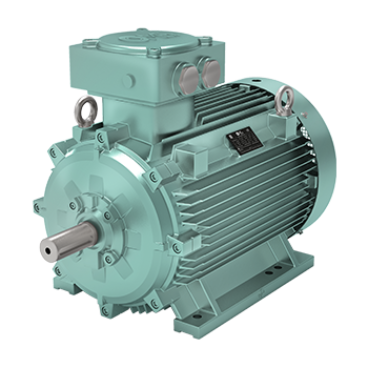
At the heart of every smoke extraction system sits a specialized electric motor: a machine designed to keep running not despite the fire, but through it. Standard industrial motors would fail within minutes when exposed to smoke temperatures of 400-600 degrees Celsius; smoke extraction motors are engineered to operate continuously in exactly those conditions.
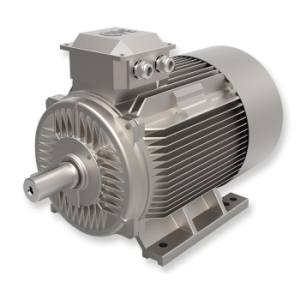
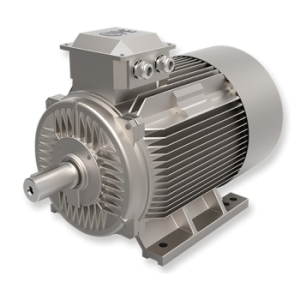
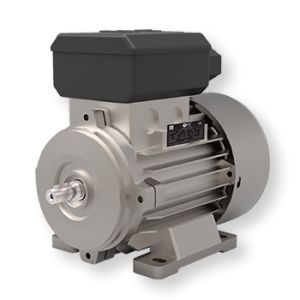
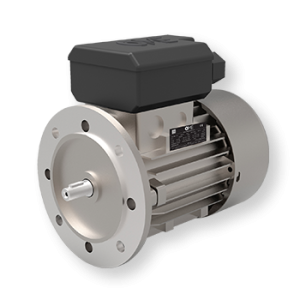
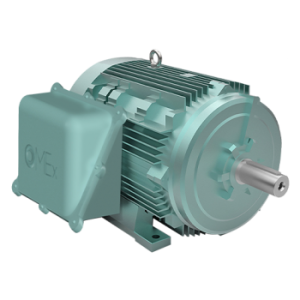
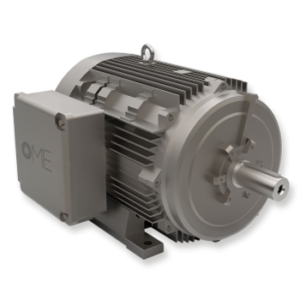
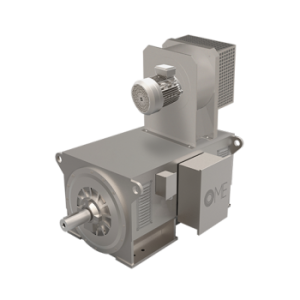
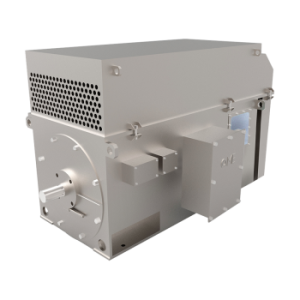
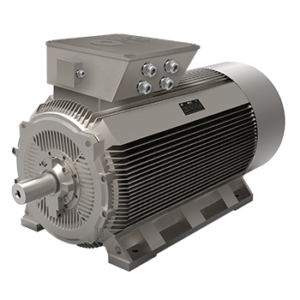
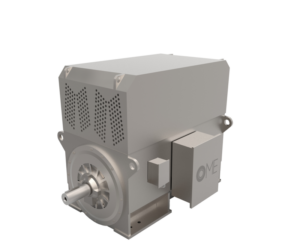
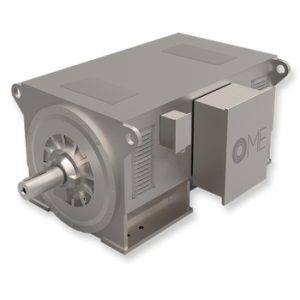
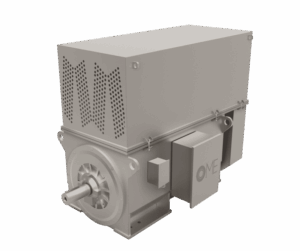
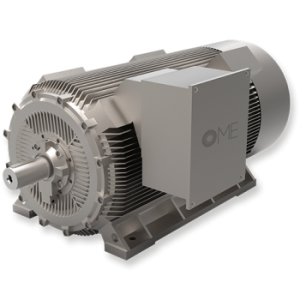
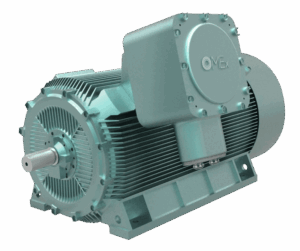
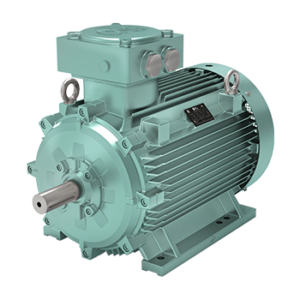
OME Motors manufactures the OMS series of smoke extraction motors certified for use in life-safety ventilation systems worldwide. This article covers the applicable standards, the temperature-time classes that define motor selection, and the criteria for specifying the correct smoke extraction motor for a project.
Regulatory framework: EN 12101, UL 705, NFPA 92
Smoke extraction motors are regulated by different standards depending on the jurisdiction where the building is located.
The European standard EN 12101 governs smoke and heat control systems across the European Union. Part 3 of the standard specifically covers powered smoke and heat exhaust ventilators, and defines the temperature-time classes to which the motors must be certified. Compliance is mandatory for buildings subject to European fire safety codes.
In the United States, UL 705 (Standard for Power Ventilators) is the safety standard for the fan itself, while NFPA 92 (Standard for Smoke Control Systems) governs the design and performance of the complete smoke control system, including the fans and motors integrated into it. Additional requirements come from local building codes and the International Building Code (IBC) applicable to the specific project.
For international EPC projects and multinational manufacturers, dual-certified motors that satisfy both EN 12101 and UL 705 simplify approvals across markets and reduce documentation overhead. The OMS series by OME Motors is designed and tested to the European EN 12101 framework, with additional certifications available on project-specific request for global installations.
Temperature-time classes: How smoke extraction motors are rated
The defining specification of a smoke extraction motor is the temperature-time class, expressed as a temperature and a duration during which the motor must continue operating without failure. The EN 12101-3 classes most commonly specified in industrial and commercial projects are:
- F200: 200 degrees Celsius, 120 minutes minimum operation
- F300: 300 degrees Celsius, 60 minutes minimum operation
- F400: 400 degrees Celsius, 120 minutes minimum operation
- F600: 600 degrees Celsius, 60 minutes minimum operation
- F842: 842 degrees Celsius, 30 minutes minimum operation
The selection of class is dictated by the fire load of the building, the design of the ventilation system, and the evacuation time required by local codes. F400 at 120 minutes is the most common specification for commercial and industrial buildings; F300 at 60 minutes is common for underground parking and low-fire-load spaces; F600 and above are reserved for tunnels, atria, and specialty industrial installations.
The engineering requirements to achieve these classes are non-trivial: bearings must retain lubrication at high temperatures, insulation systems must resist thermal degradation, terminal boxes and cable glands must remain sealed, and rotor and stator windings must not deform under thermal expansion. Standard industrial motors do not survive even the lowest of these classes.
Key selection criteria for smoke extraction motors
Specifying a smoke extraction motor for a building project involves five decisions.
Temperature-time class. Defined by the fire safety consultant on the basis of the building code, the fire load, and the evacuation strategy. This is the primary parameter and drives the motor design.
Rated power and airflow. The motor is sized on the fan curve of the driven smoke extraction fan, with adequate margin for high-temperature operation. At elevated temperature, air density decreases, and the motor must retain rated torque with reduced cooling effectiveness.
Voltage and frequency. Standard three-phase supply matched to the local distribution: 460 V or 480 V at 60 Hz for North American installations; 400 V at 50 Hz for European installations. Motors are typically supplied for direct-on-line starting; variable frequency drives can be used only if certified for smoke extraction duty.
Enclosure protection. Standard smoke extraction motors are IP55 or higher, with additional attention to cable entries, terminal boxes, and shaft seals to prevent smoke ingress into internal parts.
Mounting configuration. The motor is typically installed either external to the fan casing (V-belt or direct coupling) or immersed in the airstream inside the fan casing. The immersed configuration requires the motor to be certified for the same temperature-time class as the fan itself, without the benefit of ambient cooling air.
For a broader overview of industrial motor selection principles across all application classes, refer to the industrial electric motor buying guide already published on this blog.
Applications of smoke extraction motors
Smoke extraction motors are mandatory in a wide range of buildings and infrastructure projects where life safety codes require active smoke control systems.
High-rise commercial and residential buildings where evacuation times exceed the burn time of standard construction. Stairwell pressurization systems and mechanical smoke exhaust from occupied floors depend on smoke extraction motors.
Enclosed shopping centers and atria where large-volume smoke reservoirs must be evacuated to keep escape paths clear.
Underground parking garages where CO ventilation systems double as smoke extraction systems in a fire scenario.
Tunnels, both road and rail, with the most demanding requirements: fire loads are extreme, ventilation is critical for tenability along the tunnel length, and motor certifications typically reach F400 at 120 minutes or higher.
Industrial warehouses, logistics centers, and manufacturing facilities with fire loads that require mechanical smoke removal to protect life safety and to preserve structural integrity of the building.
Hospitals, schools, hotels, airports, and other critical infrastructure where local codes mandate active smoke control regardless of building size.
The OME Motors approach to smoke extraction
OME Motors manufactures the OMS series of smoke extraction motors for direct integration by fan and HVAC system manufacturers. Each motor is certified to the applicable EN 12101-3 temperature-time class, with type testing performed in accredited third-party laboratories. For global projects requiring dual certification or UL 705 compliance, OME collaborates with the customer’s technical team to define the certification package early in the project cycle.
Beyond the OMS series, OME Motors produces the full range of industrial electric motors for building services applications: pump motors for fire water systems, motors for HVAC ventilation, motors for elevator systems. Integrated system solutions from a single manufacturer simplify documentation and speed up building certification.
To discuss a smoke extraction motor specification for a project or to request certification documentation for the OMS series, contact the OME Motors team.











































 Headquarter - Via Camillo Golgi 8 - 25064 GUSSAGO (BS)