

Selecting an electric motor manufacturer is one of the most consequential procurement decisions an industrial buyer makes. A motor that costs $10,000 today will consume $100,000 or more in electricity over its service life, and a failure in an installed application can cost far more than that in downtime, damaged equipment, and lost production. Choosing the wrong supplier, one that cannot deliver on specification, on time, or with the support required after the sale, exposes the entire project to risk that no discount at the quotation stage can offset.
OME Motors has been designing and manufacturing industrial electric motors in Brescia, Italy since 1967, supplying customers across oil and gas, petrochemical, water treatment, power generation, and heavy industry worldwide. This article distills what we have seen over decades of project engineering into a framework buyers can use to evaluate any electric motor manufacturer, ours included.
Manufacturer, distributor, or assembler: Know who you are buying from
The first question to answer is whether the electric motor supplier is actually a manufacturer, or a distributor who resells motors produced by someone else, or an assembler who buys components and puts them together. Each category has legitimate places in the market, but the differences matter for custom projects, warranty terms, and long-term support.
A manufacturer designs and produces the motors it sells, controls the full engineering documentation, and can modify products to specific customer requirements. A distributor stocks standard motors from one or more brands, delivers quickly on catalog items, but typically cannot alter specifications or provide engineering support on custom projects. An assembler buys components (stator, rotor, castings, bearings) from third parties and assembles them; quality and traceability vary significantly depending on the sourcing discipline of the assembler.
For any project that involves custom specifications, hazardous-area certification, or long-term operational commitment, a manufacturer with in-house engineering is the correct choice.
Six criteria to evaluate an top electric motor manufacturers
Beyond the manufacturer-versus-distributor question, six technical and commercial criteria define whether a supplier can deliver on the project.
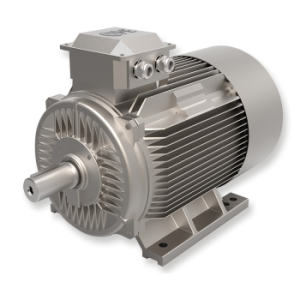
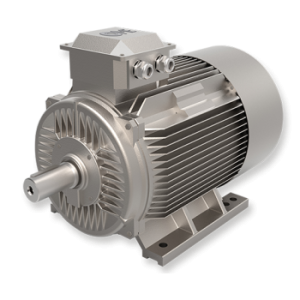
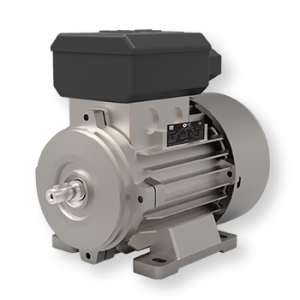
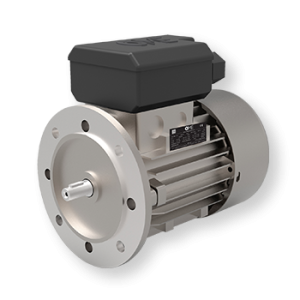
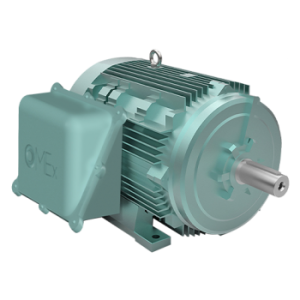
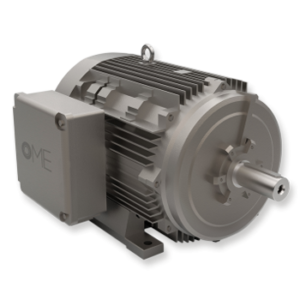
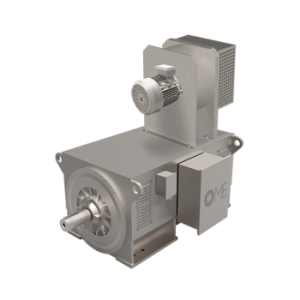
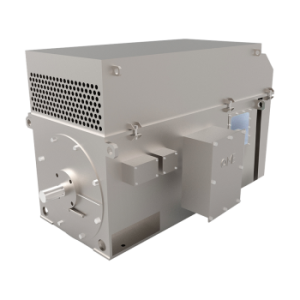
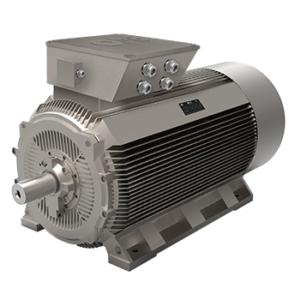
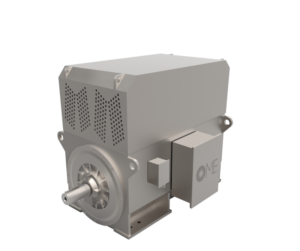
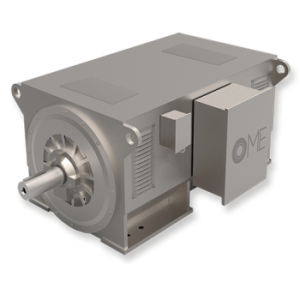
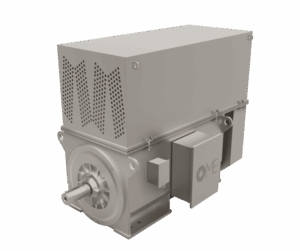
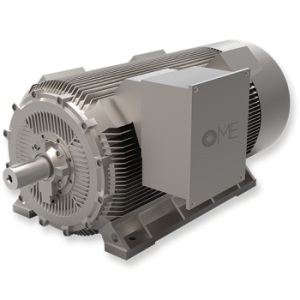
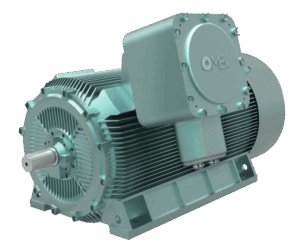
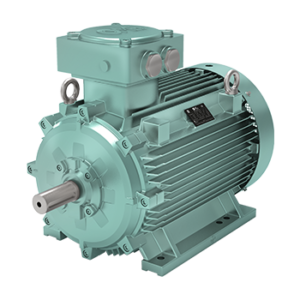
Technical capability and range. Does the manufacturer produce motors in the power, voltage, and configuration range your project requires? A supplier who serves both low-voltage general-purpose and high-voltage custom-engineered segments has the depth to handle project variations without subcontracting critical work. OME Motors covers the full range from 0.75 kW to 25 MW, in NEMA and IEC configurations, across standard, permanent magnet, DC, single-phase, high-voltage, and hazardous-area motor families.
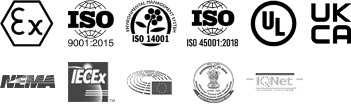
Certifications held. Verify actively held certifications, not marketing claims. The critical ones for industrial buyers are UL Listed for the North American market, ATEX and IECEx for hazardous locations, NEMA MG 1 for US frame standards, IEC 60034 for international, plus quality system certifications (ISO 9001 minimum, ISO 14001 if environmental compliance matters). Ask for certificate numbers and issuing bodies.
Industry references and installed base. A manufacturer with an installed base of hundreds or thousands of motors in your specific industry has faced and solved the practical problems that come up in your operational context. Request references or case studies in the exact application, not just generic industry claims.
In-house engineering capacity. The presence of an in-house engineering team, not a marketing group with catalog access, determines whether the manufacturer can respond to non-standard requirements, verify dimensional compatibility with existing infrastructure, and support commissioning problems in the field.
Manufacturing footprint and capacity. Where is the motor actually produced? A European manufacturer with a single European facility may deliver higher quality control but longer transit times to overseas projects; a global manufacturer with regional plants may deliver faster but with quality variability. Both models can be right, depending on the project priorities.
Financial stability and continuity. Industrial motor programs run for decades. A manufacturer whose financial situation is unclear, or whose ownership changes frequently, is a risk factor for spare parts availability and warranty enforcement over the motor life cycle.
Global sourcing: Regional considerations
Not all electric motor manufacturers are equally positioned to serve every geographic market. The three main global manufacturing regions have distinctive strengths.
European manufacturers (Italy, Germany, Austria, Sweden) typically bring strong engineering depth, high certification density across IEC and international standards, and the capability to serve custom projects with tight tolerance requirements. They often address premium market segments and industrial applications.
North American manufacturers are typically strong on NEMA compliance and UL/CSA certification, with local support networks that speed field problem resolution. Lead times to North American projects are typically shorter than European suppliers.
Asian manufacturers (China, India, Korea) offer competitive pricing on high volumes of standardized motors, with rapidly improving quality standards. Certification levels and consistency vary widely; due diligence on individual factories is essential.
For projects that require both NEMA and IEC configurations from a single supplier, or that involve export to multiple regions, a manufacturer with proven capability in both standards, such as OME Motors with the UL/CSA Electric Motor range for North America and standard IEC production for Europe and international markets, simplifies documentation and procurement significantly.
Documentation and after-Sales support
The quality of documentation and post-sale support separates a reliable long-term partner from a transactional supplier. Verify that the manufacturer provides complete technical documentation, factory test reports on every unit, spare parts availability with committed delivery times, and access to engineering support for field problems throughout the motor service life. On custom projects, the ability to reproduce a motor identical to one installed years earlier, without redesign, is a differentiator that only manufacturers with proper archival discipline can offer.
For guidance on the technical selection framework once a manufacturer has been chosen, see also the industrial electric motor buying guide already published on this blog.
The OME Motors approach
OME Motors combines the depth of a specialist European industrial electric motor manufacturers with the global reach required by modern EPC projects: 60 years of continuous production from the Brescia facility, in-house engineering and design, dual NEMA and IEC production capability, ATEX and IECEx certification, and a track record of custom-engineered installations in oil and gas, petrochemical, water treatment, power generation, and heavy industry worldwide.
To discuss a specific project or request supplier qualification documentation, contact the OME Motors team or explore the complete electric motor range.





































 Headquarter - Via Camillo Golgi 8 - 25064 GUSSAGO (BS)