


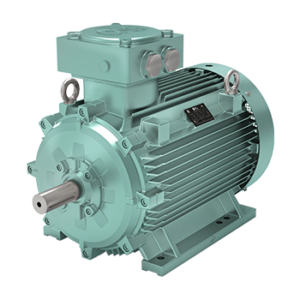
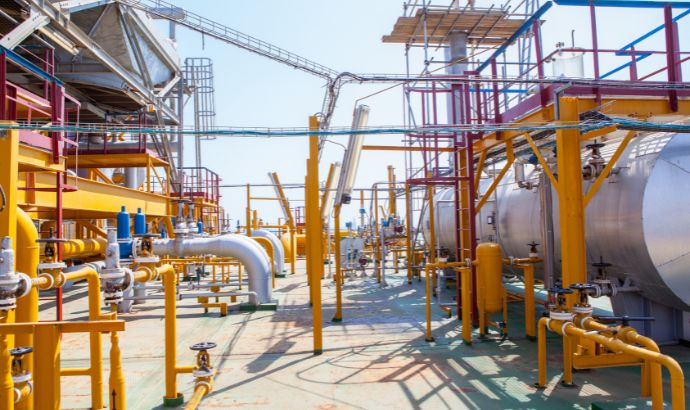
In petrochemical, refining, and oil and gas processing plants, centrifugal pumps and compressors typically account for 60–70% of total electrical consumption. A significant share of that energy is wasted: when pumps and compressors run at fixed speed and process demand varies through throttling valves, dampers, or bypass loops, energy is dissipated mechanically rather than usefully employed. Installing a variable frequency drive (VFD) — known internationally as a variable speed drive (VSD) — between the supply and the motor eliminates that waste by matching motor speed to actual process demand.
This article explains why a VFD generates substantial energy savings on petrochemical pumps and compressors, how the savings are quantified, and how OME Motors integrates inverter-driven motor solutions for the most demanding hazardous-area applications.
What is a VFD (Variable Frequency Drive)?
A variable frequency drive is an electronic power converter that supplies a three-phase AC motor with variable voltage and frequency, allowing precise control of motor speed and torque. By varying the supply frequency, the VFD adjusts the synchronous speed of the motor and consequently the flow rate of the driven pump or compressor.
The terminology varies by region: in North America the term VFD is standard, while in the UK, EU, and international engineering documentation VSD (variable speed drive) is more common. The two terms refer to the same technology when applied to AC induction or permanent magnet motors.
A complete drive solution requires three elements working together: the motor (induction or PMSM), the VFD/VSD itself, and a control system that translates process demand into a speed reference.
OME Motors supplies all three as an integrated package, configured for the specific application.
The affinity laws: Why VFDs save energy on centrifugal pumps
The fundamental reason VFDs deliver such large energy savings on centrifugal pumps and compressors lies in the affinity laws. For a centrifugal pump:
- Flow rate is proportional to speed: Q₂ / Q₁ = N₂ / N₁
- Pressure (head) is proportional to the square of speed: H₂ / H₁ = (N₂ / N₁)²
- Power consumption is proportional to the cube of speed: P₂ / P₁ = (N₂ / N₁)³
The cubic relationship between speed and power is what makes the business case. A pump running at 80% of rated speed delivers 80% of the flow but consumes only 51% of the power (0.8³ = 0.512). At 70% speed the pump consumes just 34% of rated power. Compared to a fixed-speed pump throttled to deliver the same reduced flow — which still consumes 85–95% of rated power because the motor runs at full speed against a higher discharge pressure — the energy savings are dramatic.
VFD benefits for petrochemical pumps
In a typical refinery or petrochemical plant, the largest VFD candidates are boiler feed water pumps, cooling water circulation pumps, charge pumps on distillation units, and reflux pumps. The benefits of converting these to variable speed operation include:
- Energy savings of 25–50% on the typical duty cycle
- Improved process control through direct speed regulation instead of throttling valve modulation
- Reduced mechanical stress on impellers, shaft seals, and bearings, with corresponding extension of MTBF
- Cavitation prevention by matching pump speed to suction conditions
- Soft-start capability that eliminates the high inrush currents and pipeline shocks of direct-on-line starting
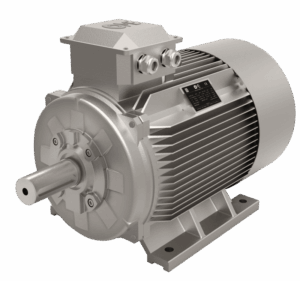
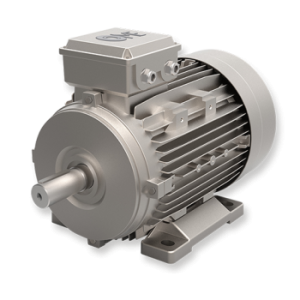
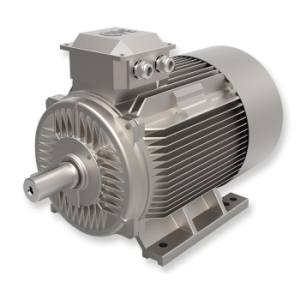
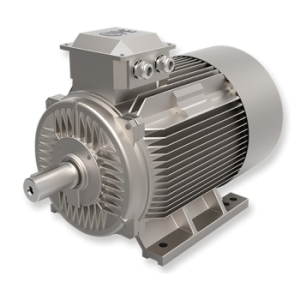
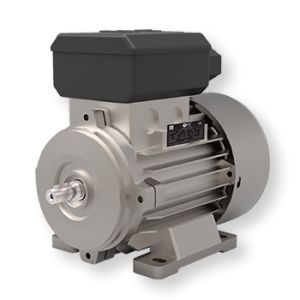
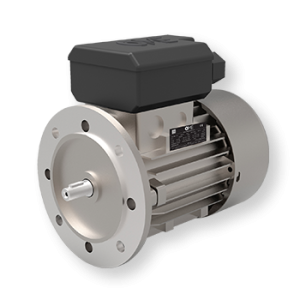
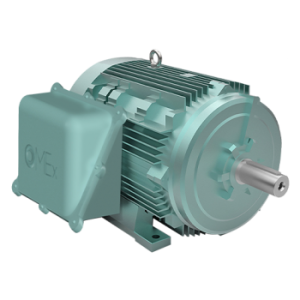
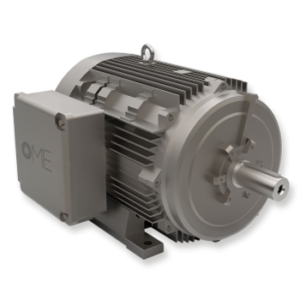
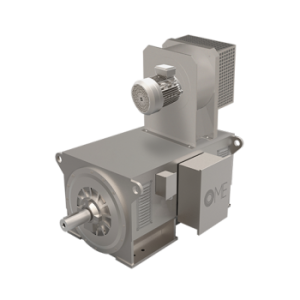
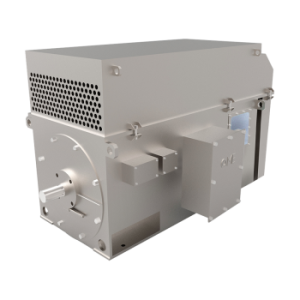
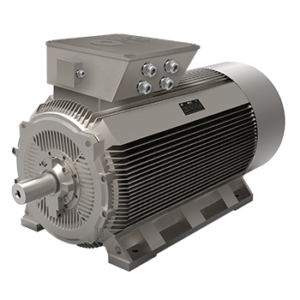
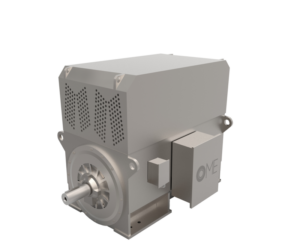
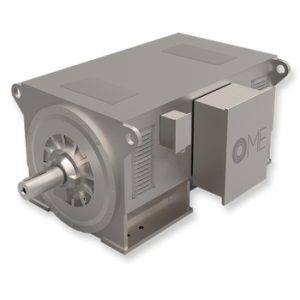
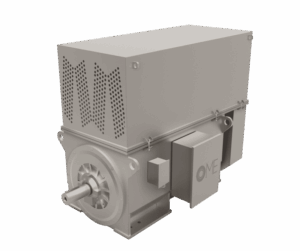
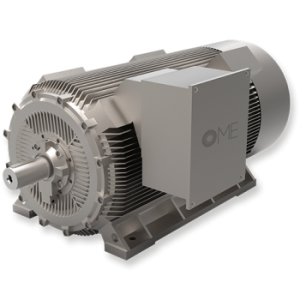
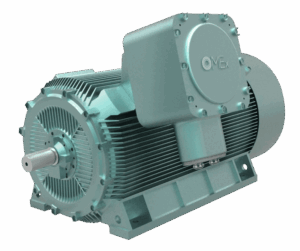
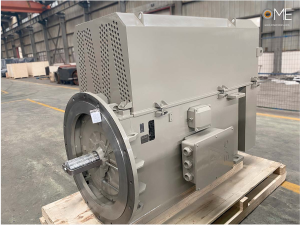
For applications in classified hazardous areas — Class 1 Division 1 and Division 2 zones common in oil and gas processing — both the motor and the VFD must meet the area classification requirements. The OME Motors OMNEX series of NEMA explosion-proof motors and the OMEX explosion-proof motor range are designed for VFD operation in hazardous environments, with insulated bearings to prevent shaft currents and integrated PTC thermistors for direct winding temperature monitoring.
VFD applications in petrochemical compressors
Variable speed control is equally valuable on petrochemical compressors. For centrifugal compressors — common on natural gas processing trains, refrigeration cycles, and process gas service — a VFD enables continuous capacity modulation by varying compressor speed, replacing inefficient suction throttling or recycle control. The energy savings track the same cubic law as centrifugal pumps.
For reciprocating compressors, VFD control allows precise capacity adjustment and surge prevention, particularly valuable on compressors handling expensive process gases where venting is undesirable. The starting current is also dramatically reduced, which matters on large compressors where direct-on-line starting would draw excessive current from the substation.
Payback calculation: a concrete example
Consider a 500 kW centrifugal pump in a refinery cooling water service, running 6,000 hours per year. Process demand averages 75% of rated flow.
- Fixed-speed operation with throttling: motor draws approximately 90% of rated power, or 450 kW. Annual consumption: 2,700,000 kWh.
- VFD operation at 75% speed: power consumption drops to 0.75³ = 42% of rated, or 210 kW. Annual consumption: 1,260,000 kWh.
The annual saving is 1,440,000 kWh. At an industrial electricity cost of $0.085/kWh (US average for heavy industry 2026), the saving translates to approximately $122,000 per year. A typical VFD installation cost for this rating is $40,000–$60,000, yielding a payback period of 5 to 7 months. Over a 15-year operating life, the net saving exceeds $1.7 million per pump.
Choosing the right motor-VFD combination
The motor selection alongside the VFD determines the overall efficiency of the system. Three options are common in petrochemical service:
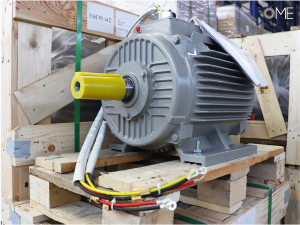
- Standard induction motor + VFD — the most common solution, with NEMA Premium efficiency motors driven by VFDs is suitable for most petrochemical pump and compressor applications.
- PMSM + VFD — the highest-efficiency option, with a permanent magnet synchronous motor delivering 2–4 efficiency points more than an IE4 induction motor across the operating range. See our article on PMSM motors explained for the technology details.
- Hazardous-area motor + VFD — explosion-proof motors certified for VFD operation, mandatory in Class 1 Division 1 and 2 zones.
The OME Motors engineering team supports customers in selecting the right combination based on duty cycle, hazardous area classification, and lifetime cost targets.
The OME Motors integrated approach
OME Motors designs and manufactures industrial electric motors from 0.75 kW to 25,000 kW and supplies VFD/VSD inverter solutions integrated with the motor specification — ensuring that drive parameters, motor insulation, bearing isolation, and thermal protection are matched as a complete system. To discuss a petrochemical project or request a VFD payback evaluation for your application, contact the OME Motors engineering team or explore the inverter and motor solutions catalog.

































































 Headquarter - Via Camillo Golgi 8 - 25064 GUSSAGO (BS)