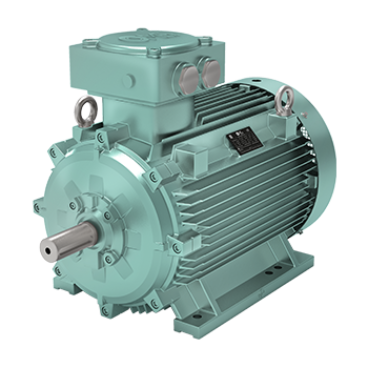

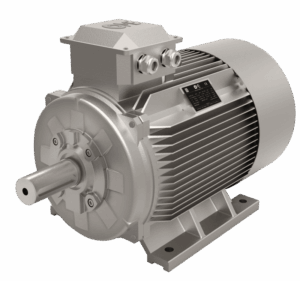
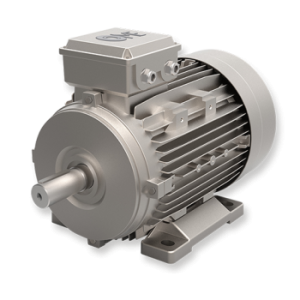
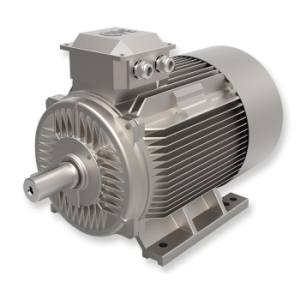
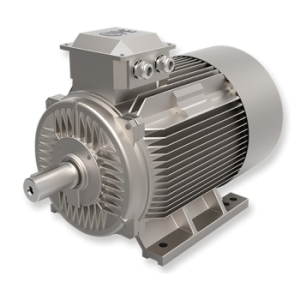
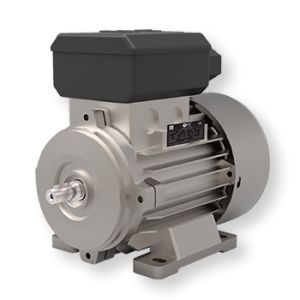
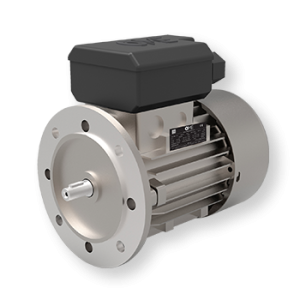
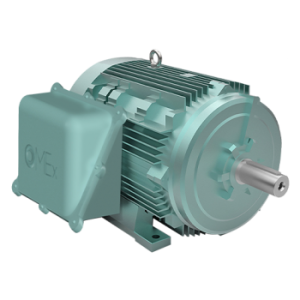
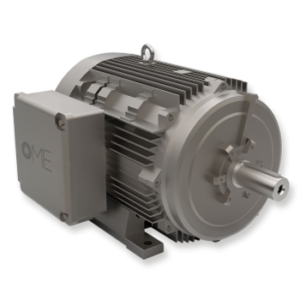
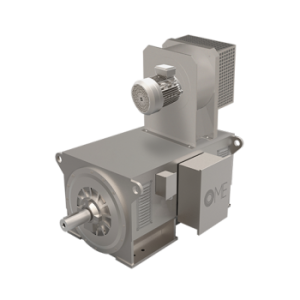
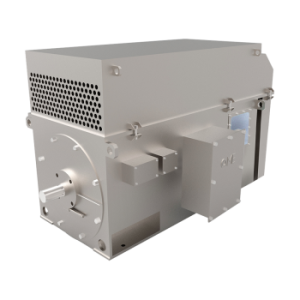
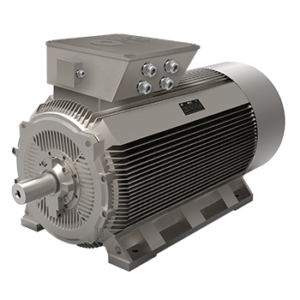

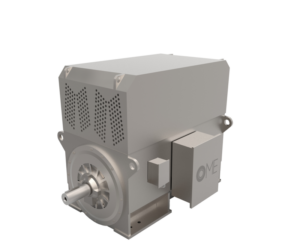
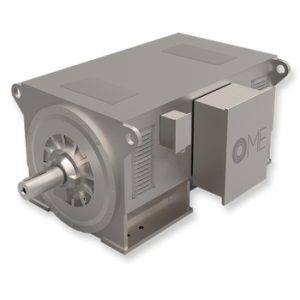
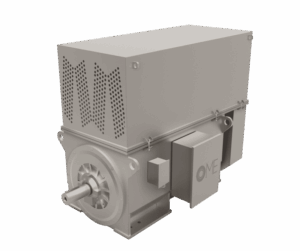
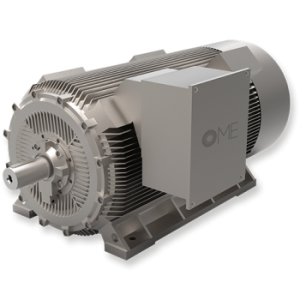
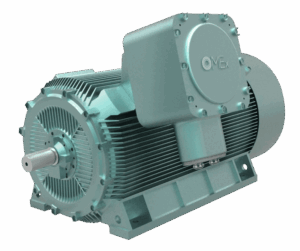
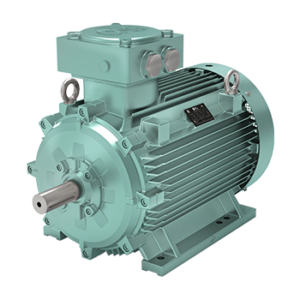
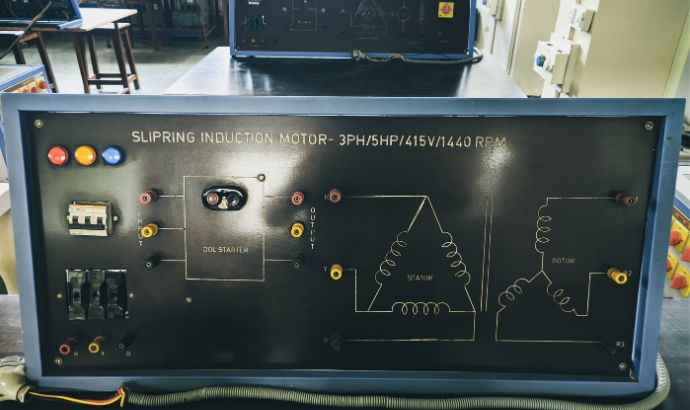
Slip ring motors, also known as wound rotor induction motors, are a specialized class of three-phase asynchronous machines designed for industrial applications with two demanding requirements: extremely high starting torque and controlled inrush current at start-up. Where standard squirrel cage motors would either fail to start under load or draw currents damaging to the electrical supply, slip ring motors deliver the coupling torque required by heavy inertia loads such as ball mills, crushers, kilns, and large fans, all while limiting starting current to values compatible with the plant substation.
OME Motors manufactures industrial slip ring motors as part of the OMA high-voltage slip-ring motor series, engineered for the most demanding applications in mining, cement, steel, and heavy-industry service.
This article explains how a slip ring motor works, its distinctive advantages, the industrial applications where it remains the correct choice, and the maintenance requirements that come with the wound rotor construction.
Working principle: What makes a slip ring motor different
The stator of a slip ring motor is identical to that of any standard three-phase induction motor: a three-phase winding is supplied by the AC line and produces a rotating magnetic field. The difference is in the rotor. Instead of a solid squirrel cage of aluminum or copper bars shorted at both ends, a slip ring motor has a rotor with a proper three-phase winding, its terminals brought out to three insulated slip rings mounted on the shaft.
Three carbon brushes contact the slip rings and connect the rotor winding to an external resistor bank or, in modern configurations, to a solid-state controller. By varying the external resistance during start-up and normal operation, the operator can control two critical parameters independently: the starting torque and the starting current.
At start-up, resistance is switched into the rotor circuit. This limits the rotor current and, thanks to the electromechanical relationship between rotor resistance and torque, shifts the peak torque toward zero speed. The motor accelerates from standstill while drawing a fraction of the current that a squirrel cage motor of the same power would draw. As the motor approaches operating speed, resistance is progressively cut out until the rotor windings run essentially short-circuited, behaving as a standard induction machine at full speed.
Slip ring vs squirrel cage: Key differences
The choice between a slip ring motor and a squirrel cage motor comes down to the load characteristics.
A squirrel cage motor is mechanically simpler, less expensive, and requires no maintenance of brushes or slip rings. It starts across the line with starting torque typically 150-250% of rated torque and starting current 600-800% of rated current. It is the correct choice for the vast majority of general-purpose industrial applications.
A slip ring motor is more complex mechanically, requires periodic brush and slip ring maintenance, and carries a higher initial cost. In exchange, it offers starting torque up to 250-300% of rated with starting current limited to 150-250% of rated, plus the ability to control speed within a limited range by adjusting rotor resistance. It is the correct choice when the driven load has extreme starting inertia, when the electrical supply cannot tolerate the inrush current of a squirrel cage motor, or when the process requires soft acceleration to protect couplings and mechanical transmission.
Industrial applications of slip ring motors
Slip ring motors remain the standard choice in a specific set of industrial applications where their coupling torque and controlled inrush characteristics are non-negotiable.
Ball mills and rod mills in mining, cement, and mineral processing. The rotating drum filled with grinding media has enormous inertia at start-up. A slip ring motor accelerates the mill from standstill smoothly, without the mechanical shocks that a direct-on-line squirrel cage start would generate.
Rotary kilns and cement production. Cement plants use slip ring motors for the main kiln drive, where the load is heavy, the starting inertia is significant, and any electrical disturbance is unacceptable.
Crushers and rolling mills. In steel and metallurgical industries, primary crushers and heavy rolling mills use slip ring motors for the same reasons.
Large fans and blowers in industrial ventilation. Big centrifugal fans in power plants, marine service, and industrial ventilation with rotor inertia measured in hundreds of kg per m squared benefit from the controlled acceleration a slip ring motor provides.
Marine propulsion auxiliaries and ship-board machinery where limited generator capacity forbids direct-on-line starting of large induction motors.
For these applications, OME Motors supplies the OMA slip-ring motor series in high-voltage configuration up to 13.8 kV, with power ratings in the multi-megawatt range for the most demanding installations. Alternative solutions for the same applications, such as squirrel cage motors driven by soft starters or medium-voltage inverters, are covered elsewhere in the OME product range.
Slip ring motor maintenance: What to plan for
The presence of brushes and slip rings introduces maintenance requirements absent in squirrel cage motors. A well-structured maintenance program covers five items.
Brush inspection and replacement. Carbon brushes wear with use. Depending on operating hours, load profile, and environmental conditions, brushes typically last 3,000-6,000 operating hours. Inspection every 500-1,000 hours is standard; replacement is triggered when brushes reach the wear indicator marked on the brush body.
Slip ring surface condition. The three slip rings must remain smooth, concentric, and free from grooving. Light periodic polishing with fine emery cloth is standard practice; heavier machining is required if grooves develop from irregular brush contact.
Brush spring pressure verification. The correct contact pressure between brush and slip ring is critical to low resistance connection and long brush life. Springs weaken over time and periodic verification is required, typically annually.
Rotor winding insulation. The rotor windings are subject to the same thermal and dielectric stresses as the stator. Megger testing of insulation resistance every 12-24 months confirms winding health.
External starting resistor or controller. If the machine still uses a step resistor for starting, contactors and resistance elements require periodic inspection. Modern installations replace the step resistor with a solid-state rotor controller, which requires only firmware and diagnostic checks.
Total maintenance overhead of a slip ring motor is higher than a squirrel cage motor of equivalent size, but predictable and controllable. Under a proper maintenance program, slip ring motors deliver service lives of 25-30 years or more in continuous industrial duty.
Choosing the right slip ring motor for your Application
OME Motors engineers each OMA slip ring motor to project-specific requirements: rated power, voltage class up to 13.8 kV, cooling system, protection degree, starting torque profile, and any project-specific certifications for global installation.
Every unit undergoes routine and type testing at the Brescia facility before delivery. To discuss a project specification or request an engineering evaluation for your slip ring motor application, contact the OME Motors team or explore thefull electric motor range.




















































 Headquarter - Via Camillo Golgi 8 - 25064 GUSSAGO (BS)